
What does Puglia feel like?
What are the tactile experiences it gives slow travellers?
Many.
From the water on your skin, to the air flowing through your hair, to the sun burning your skin.
But most of all, it gives you chills.
Nothing intense, nothing stimulating. On the contrary, it is, I believe, what babies feel just a moment before they fall asleep.
A cuddling, ethereal feeling.
There’s an object whose surface reminds me of that feeling.
It is a simple and banal mental association, but that’s how our brains work, I guess.
Not always as poetic as we’d like.
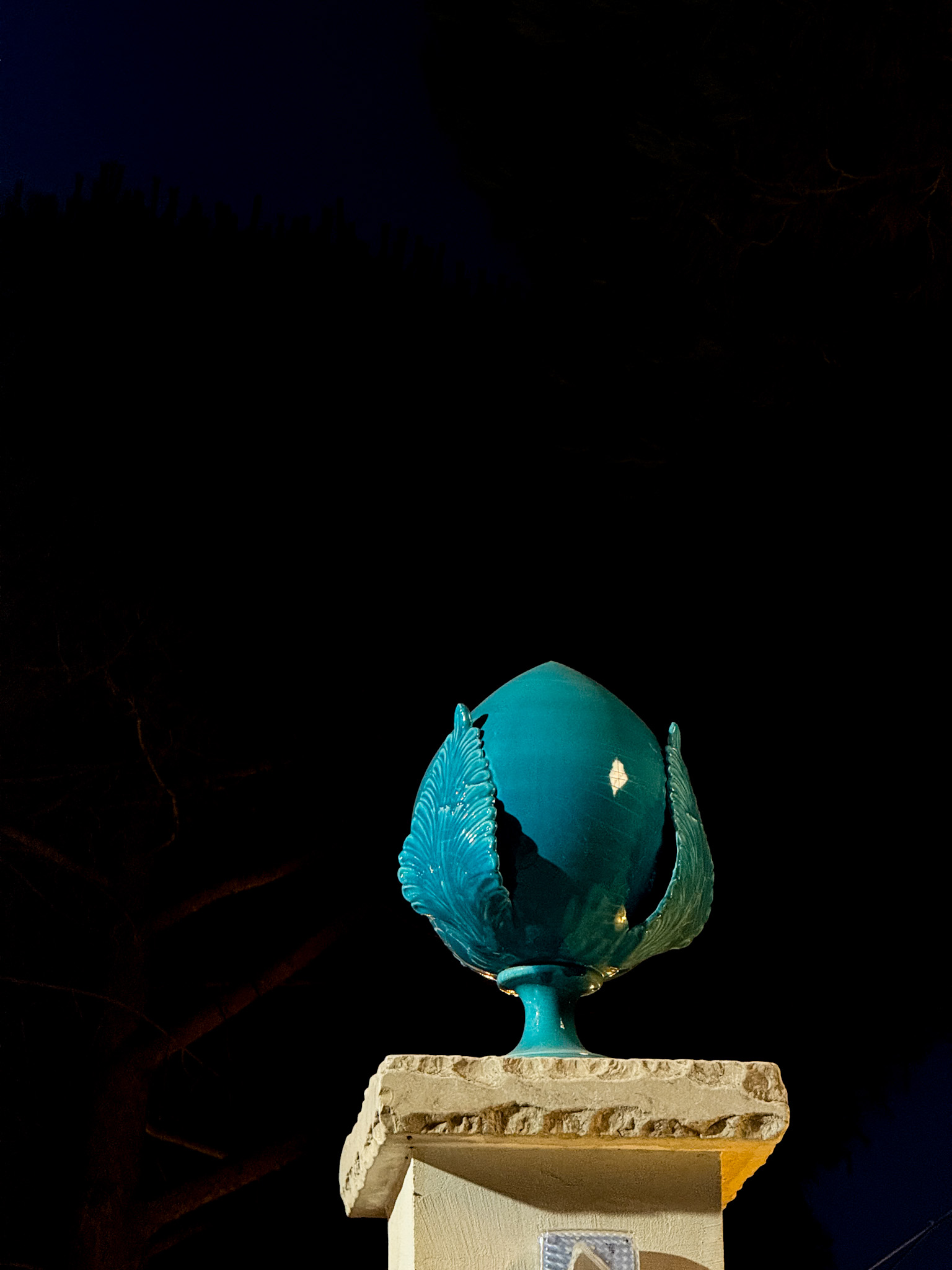
It is the smooth, cold surface of a pumo.

What Is a Pumo Pugliese?
A ceramic ornament.
One of my favourite souvenirs from the region.
Traditionally placed on terraces and balcony banisters, today pumi also adorn house shelves and are said to bring wealth and good luck.
Sometimes a pumo is so stylized, so smooth, it could be enclosed in my hands and treated as a crystal ball—for memories more than premonitions.
But most often, the central bud is held by acanthus leaves, one of the most popular adornments in both Ancient Greece and Rome.
Let me count…
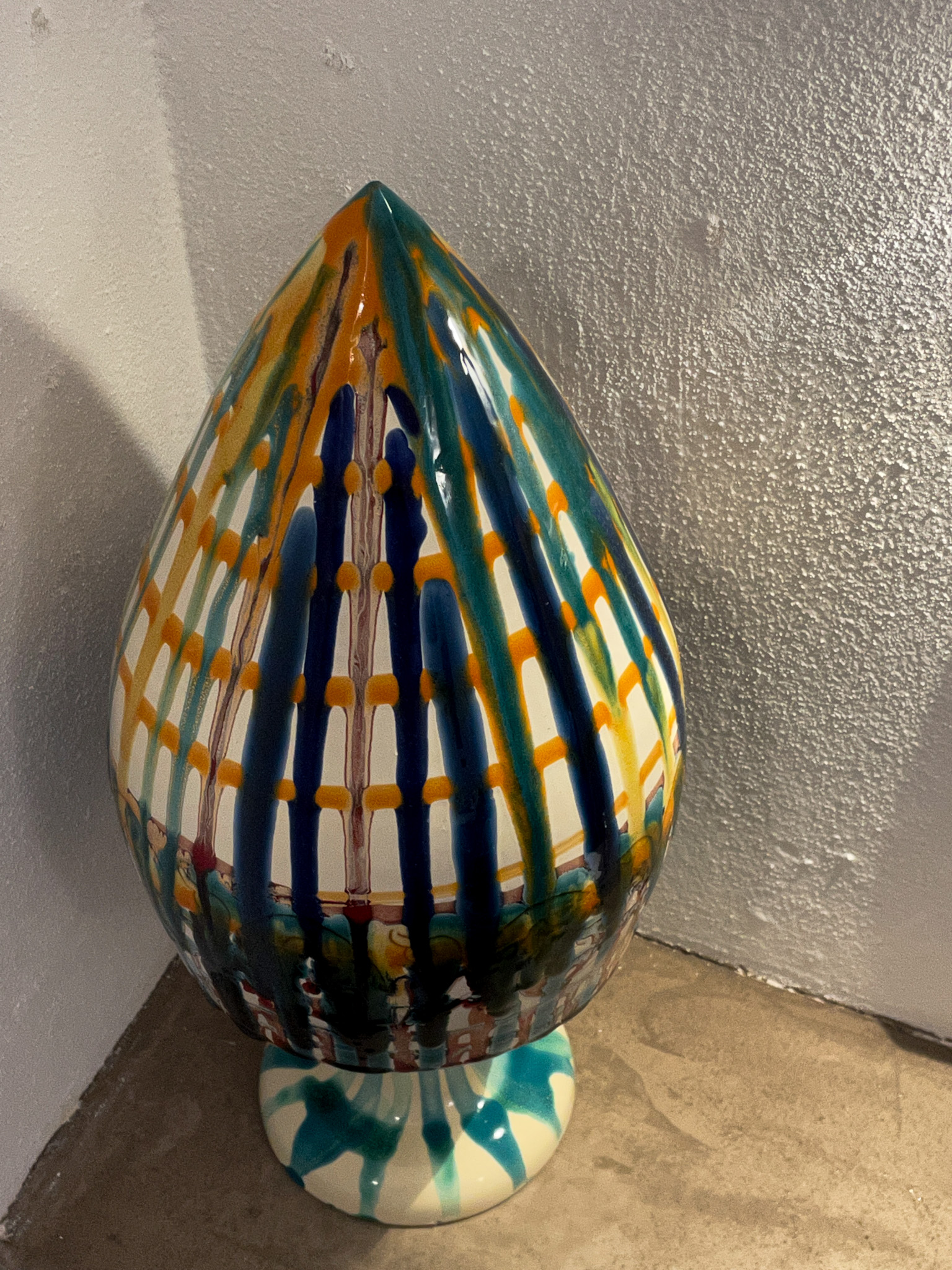
I have seven, in many sizes, a few colours, and one delightfully decorated.
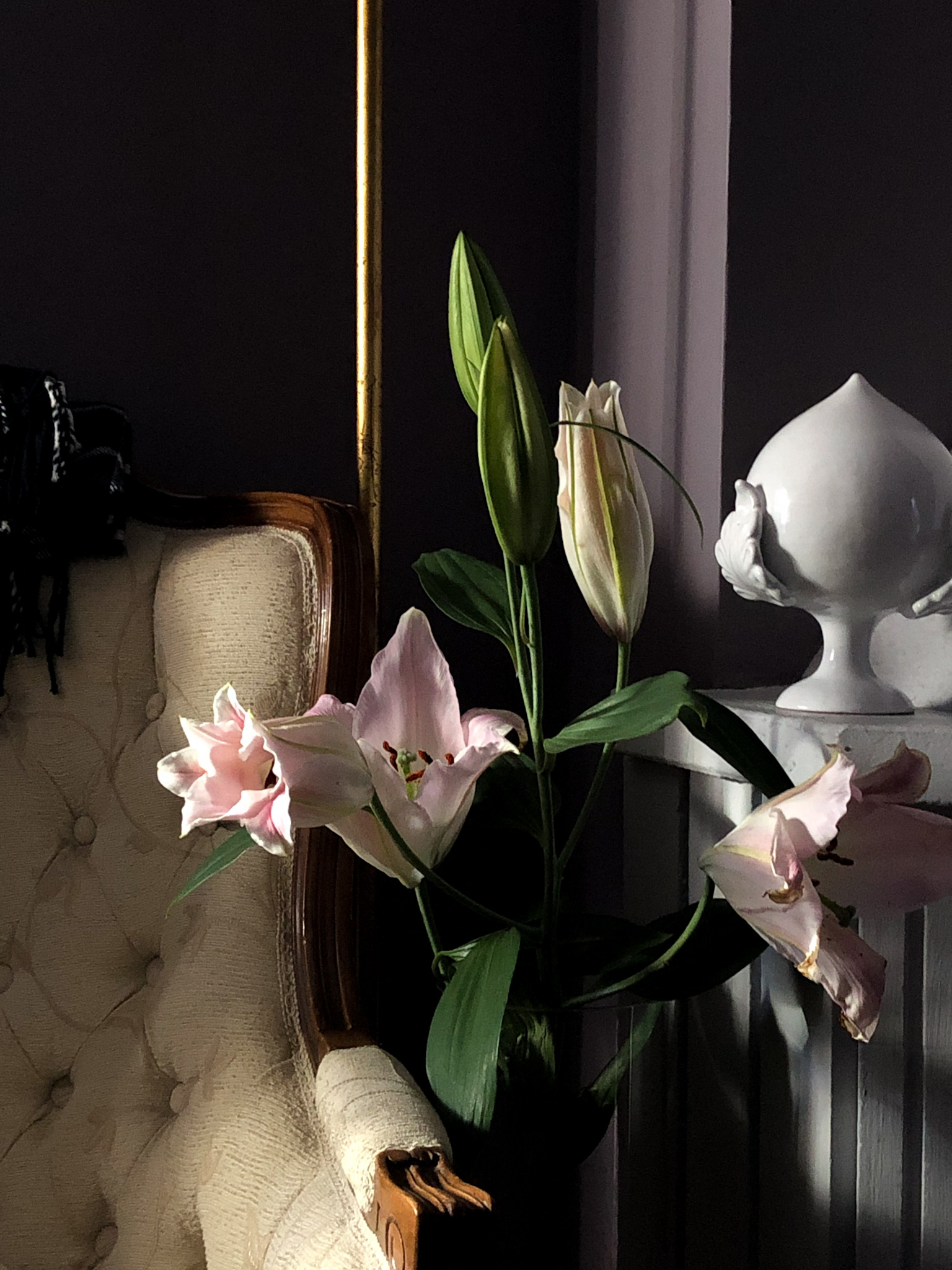
But white is the most classic.
Some were gifted—including two personalized ones, one with GP’s logo and one with Fiorentina’s emblem, my husband’s soccer team.
One was the favour from a dear friend’s wedding.
And the ultra-decorated one, of course, is mine.
I saw it.
I fell for it.
I made it mine!
With money. No need for all Vertumno’s stratagems…
The ones coming.
What Does the Pumo Represent?
What a pumo represents is a bit uncertain.
Some say a blossom, some say an apple, some say a pomegranate.
And, as a matter of fact, in Grottaglie, where some of the best pumi and other Apulian ceramic artefacts come from, you’ll also find many pomegranates—not stylized as the pumi, but much more realistic and detailed.
The most established traditional interpretation sees the pumo as a flower bud ready to open, a symbol of new life, prosperity and good fortune. The name itself is generally connected with the Latin pomum: fruit.
And this is where Pomona enters the story.
Pomona: Not a Greek Goddess
There is a very popular association between the pumo and the nymph Pomona.
Not a Greek goddess, as you might imagine, since we are in Magna Graecia, but an ancient Roman divinity—more precisely, an old Italo-Roman goddess of fruit.
Ovid presents her as a nymph.
Related male divinities are attested among Umbrian and Sabine populations too, suggesting a religious world that extended beyond Rome itself.
She was the protector of tree fruit, orchards and arboreal cultivation.
Olive trees and vineyards too.
So nothing wild like Diana’s woods, and something more edible than Flora’s flowers.
Still, I’d love to see the three of them sitting next to one another, chatting about weather, soil, and humankind’s behaviour.
Classically, Pomona was portrayed holding a curved pruning knife—a woman at work, dirtying her hands and nails, not a manicure lady for sure.
Maybe with her toga all crumpled under denim overalls and a couple of sprigs caught between her long dark braids.

Pomona and Vertumnus
If, as I love to, we take inspiration from Ovid’s recounting, Vertumnus enters the scene.
A god the Romans associated with transformation and change, and one ancient tradition connected with Etruria.
He appears, basket in hand, ready to fill it with whatever his lady has helped flourish that month.
He has waited so long for this moment, for Pomona to finally let him near her.
She was a nymph who avoided men and lived inside her garden, banning masculine access.
Which is why he had needed his transformative powers to conceal himself.
As a reaper.
As an ox driver.
As a vineyard pruner.
As a fruit picker.
As a soldier.
As a fisherman, depending on the season.
But none of his identities had been granted access to the garden.
In the end, he grabbed a worn out mantle and disguised himself as an old lady.
Finally inside the garden, he began his propaganda programme.
Starting with an elm wrapped in a vine, both growing strong and flourishing because of mutuality.
By the way, this is the famous vite maritata, an incredibly ancient—and romantic—agricultural practice.
Who could be one of the two plants for Pomona?
“I know a guy. He’s young, handsome, strong, a lover of Nature, and quite adaptable!”
But Pomona was not easy prey.
She listened but didn’t really pay attention.
Concentrated on clearing the weeds from the soil.
So the old lady played one last card: a moral tale about Iphis, who hanged himself in front of Anaxarete’s door after being rejected by her.
And about Anaxarete herself being turned to stone, so hard had she been toward the boy.
Finally, the god threw away the mantle and revealed his true appearance.
Perhaps even preparing to use force.
But Pomona fell in love the minute she saw him for who he truly was.
So all that fuss was probably not that necessary, Vertumnus thinks, filled basket in hand.
Who knows if the story would’ve gone differently if she—or he—had had a pumo crystal ball.
If you’d like to keep exploring this Puglia with me—its objects, food, stories, gods and beautifully strange connections—you can continue in my Simposio about Taranto, Puglia’s city of mermaids.

Enjoy Puglia’s infinite heritage!
Claudia