
Venice Carnival culture is much more than masks, costumes, and a spectacular yearly celebration. Behind the Venetian Carnival lies a very old human desire: to step outside the rules, become anonymous, speak freely, eat, drink, laugh, and, at least for a while, be equal.

Carnival, Equality, and a Very Old Human Desire
Equality is a notion too often exploited.
Manipulated for egoistic, propagandistic, or marketing purposes.
A promise rarely kept.
And still, occasionally enjoyed with holidays and celebrations.
Ancient Romans had Saturnalia, two to seven days—depending on the era—during which everybody dressed the same and had the same right: to enjoy the festivities, eat, drink, and have fun.
Both ancient Rome and ancient Greece had Dionysian cults that were celebrated with blinding, freeing ardor, fueled by wine and masquerades. The two celebrations blended, evolved, changed, temporarily disappeared, and reappeared in the most pagan of the Italian festivities: Carnevale.
Many, if not all, Italian cities and towns have their unique Carnival celebrations, traditions, and foods.
But the queen of Carnival is, with no possible doubt, Venice.
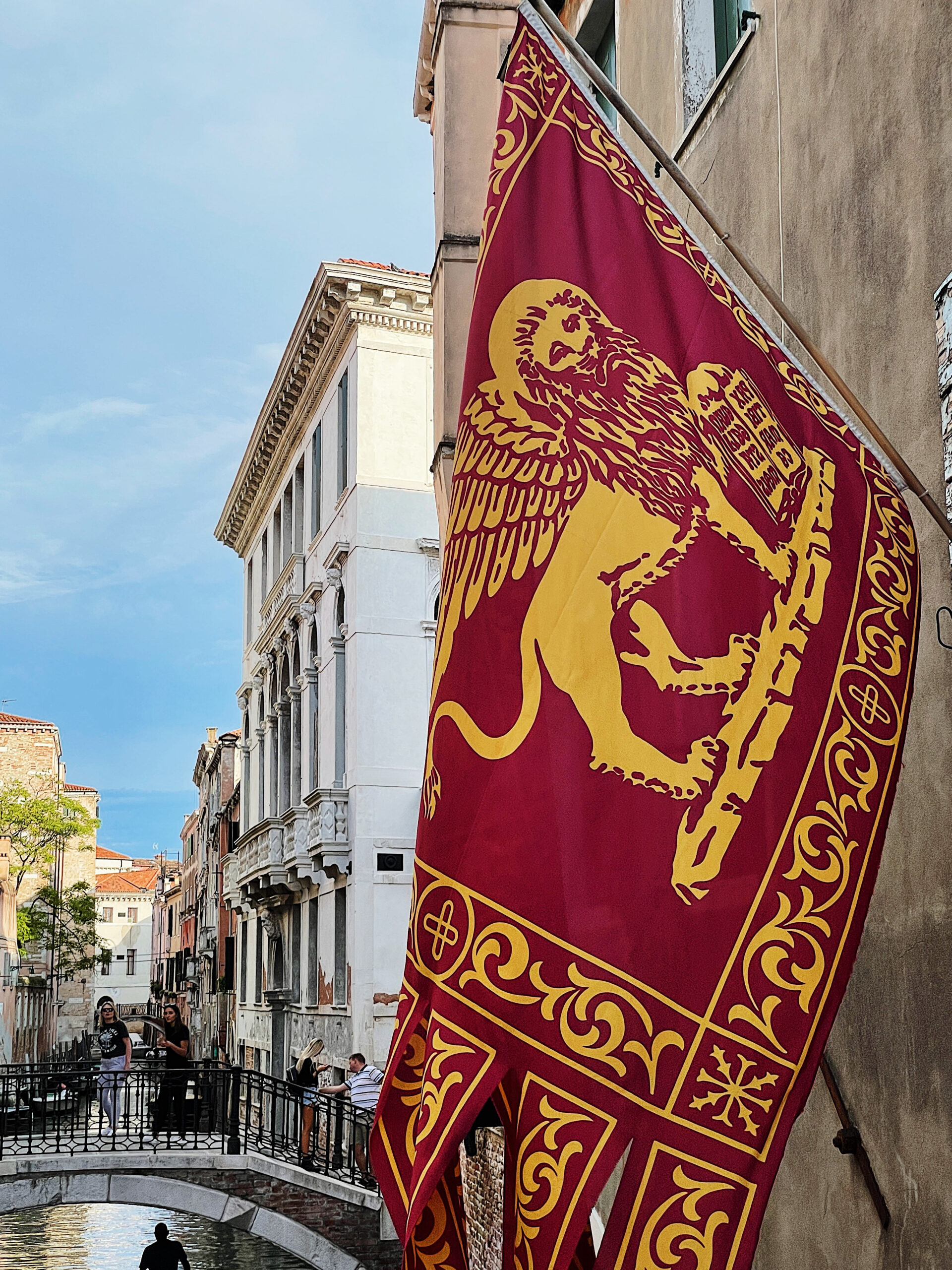
How Venice Became the Queen of Carnival
Its Carnival re-emerged from the ashes of the classical era: the first mention, by a Doge, of a celebratory day was in 1094.
Venetians, lovers—and who wouldn’t?—of freedom of speech and revelry, cultivated it and began to produce masks, costumes, and the art of comedy.
Up to that date, and for a few centuries beyond, the only representations ordinary people had access to were religious and often linked to processions. Greek and Roman dramas, rediscovered during the Renaissance by numerous noblemen’s academies, lived inside the walls of noble palaces.
Then came Commedia dell’Arte.

Commedia dell’Arte and the Birth of the Masks
Commedia dell’Arte, the typical folk Italian comedy, was born in the streets, away from luxury and intellectual highness.
The language used was that of the masses: the dialects of the single regions and cities. Latin only if an erudite or wannabe was portrayed.
The characters represented commoners. Or teased the rich and noble.
The word Arte referred to artisanship and delineated the professionalism of those who entertained people in the piazzas, making a living from it.
The individual actors specialized in a character with precise characteristics and lines. They had a story: a city of origin and a corresponding dialect, plus flaws, desires, passions, and friends.
The encounter between people from different places in Italy and consequent multilingualism gave birth to fun misunderstandings and hilarious scenes.
Actors followed a canovaccio, a bare script that gave them an outline of the story but asked for their discernment. It might, for example, say:
“Arlecchino enters the stage and makes a silly joke.”
The actor decided which joke, based on the story, but also on the audience and his past experiences.
It was hard work and a hard life. A wandering life around the peninsula, and soon around Europe.
Women were not allowed into the profession: the Church already condemned those it couldn’t keep a close eye on—through Sunday sermons, confession, precepts, and town gossip—imagine letting go of its power over ladies too!
And still, starting with the wives and daughters of the companies’ chiefs, women were gradually incorporated. They trod the boards and were paid for it for the first time in the history of Europe.
We had a greatly evolved society back then, despite religion.
What’s happened?
I have a few theories, but I will not torment you.

Pantalone, Moretta, Gnaga, and the Venetian Masks
Commedia dell’Arte gave birth to the Italian regional Maschere. With time, and long after the art vanished, they became the protagonists of puppet theaters and local Carnival parades.
Pantalone is an actual traditional Venetian mask.
He’s a merchant.
He is greedy.
And is always ridiculously skirt-chasing too-young maids, naively trying to use his money and power to get them to reciprocate.
His typical ensemble is made of a red blouse and pants, a black cape and hat, slippers usually worn by the elderly, plus a long, grayish beard.
“E Pantalone paga!!!”
And Pantalone ends up paying.
Still today, in Italy, we often complain, “E io pago!” when we end up opening the wallet for the errors or excesses of others.
Another popular Venetian mask is the Gnaga, or cat woman—gnaga in the Venetian dialect means meow.
It was favored by homosexuals who also dressed in folk or nanny clothes combined with gloves with long claws. They crossed the streets, meowing and carrying a cat—or many—in a basket, or a bunch of kids (or men dressed like children).
The Moretta, brunette, was usually worn by women, who held it in place between the teeth, the reason why it was also named the mute maid.
It is made of black velvet and oval-shaped, completed by a veil and a wide-brimmed hat. It was considered a very mysterious and attractive mask.
And then there is the most iconic costume of Venice: the Bauta.
A black silk cloak, the tabarro, enriched with laces and broderie, a hat that changed according to eras and fashion—but the most popular today is the tricorn—and a white mask, the larva, that covers the face but protrudes on the lower part to let the person eat and drink without having to take it off.
Although a Carnival mask, the Bauta was worn by men and women throughout the year.
From October 5th to December 16th, Venetians could freely sport it. For a night at the theater, at parties, or on the street, walking toward a clandestine date.
They could also flaunt it during laic celebrations and for the election of the Doge.
To foreigners, it appeared that Venice had a six-month-long Carnival.
Others described it as a city populated by spirits.

The Real Meaning of Venetian Carnival Masks
Anonymity and personal freedom were the actual reasons for this custom.
You could talk, flirt, discuss with anyone, lose a fortune at the casinos, and all without the trace of gossip following you back home.
Will there be a day when we won’t need anonymity and feel free to do what we like when we like, without fearing the judgment of others?
When we’ll all have the right to choose for ourselves?
Will humankind ever evolve so profoundly?
Venice Carnival Traditions Today
Carnival was actually six weeks long and animated by many activities.
The first, still held nowadays with slight variations, was the Festa delle Marie. Twelve girls of the people, already engaged, were selected to receive a substantial dowry donated by noble and wealthy families.
The girls were dressed up and jeweled, then accompanied by the Doge to the church of San Marco. There, they were blessed. Finally, they were hosted, with their grooms, in the Palazzo del Doge for a rich banquet.
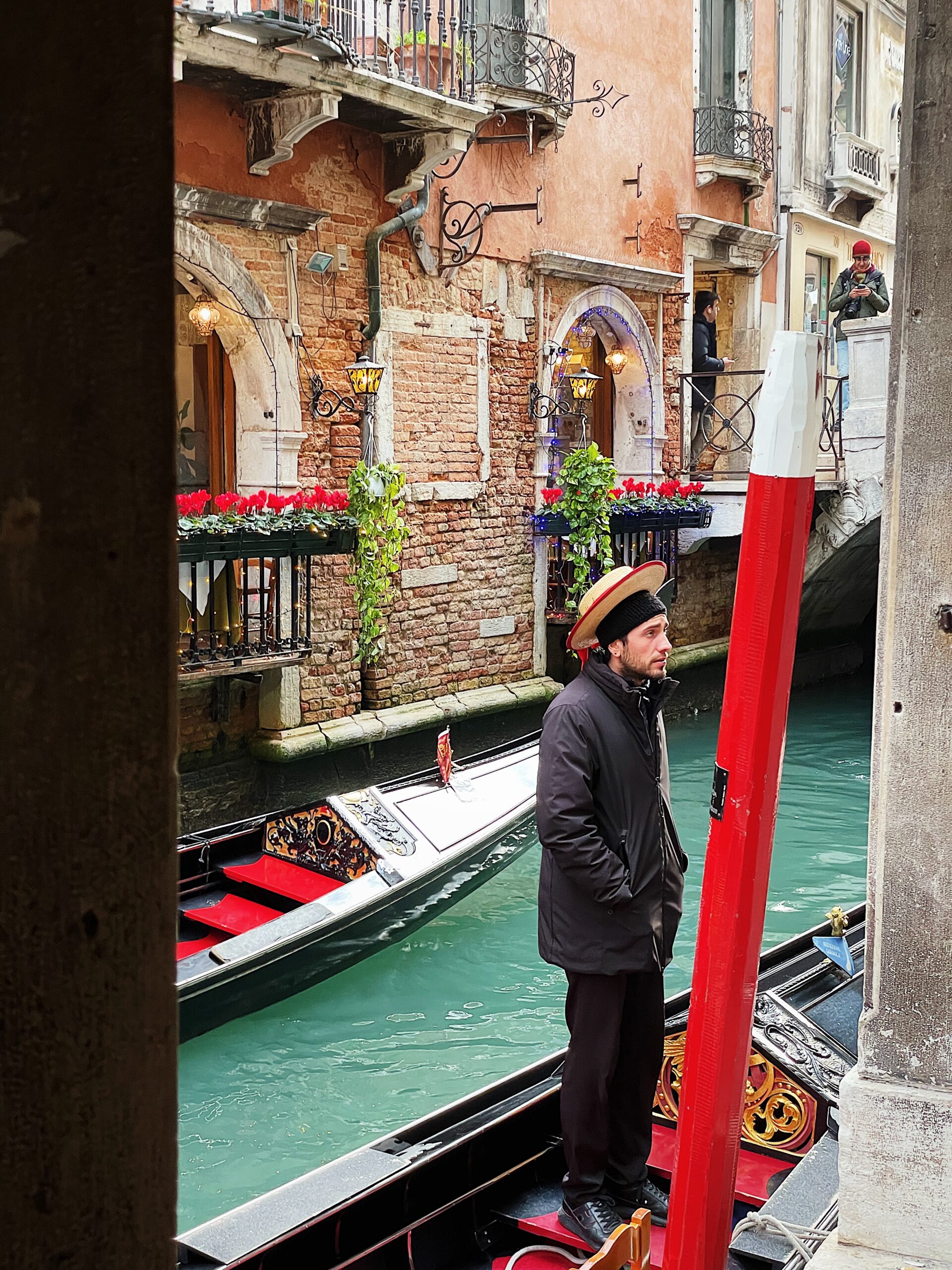
Nowadays, the girls are invited to private parties and events and parade the city on gondolas.
On the second Sunday of Carnival, Piazza San Marco still today hosts the Volo dell’Angelo.
Originally, a Turkish man crossed the piazza on a rope hanging from a boat to the bell tower. Once there—and after many acrobatics—he saluted the Doge and offered flowers to the Dogaressa, his wife.
When, in 1759, a man fell onto the crowd, the “Angel” was replaced by a Colombina, a dove silhouette.
Today, thanks to the technical support of safety harnesses, it is once again a person crossing the piazza.
Every day of the Carnival celebrations was filled with parties and theater performances, both private, in beautiful palazzi, and public, in the campi.
People met on the streets and simply said, “Buongiorno siora maschera,” good morning Mr./Mrs. Mask.
Music played, and treats were offered by street vendors.
Since at least the 1600s, the most traditional are the fritole: fritters made of eggs, flour, sugar, raisins, and pine nuts.
Something you can’t miss if you are lucky and brave enough to visit Venice during the hyper-crowded Carnival celebrations.
It is what equality means today: hordes of people shouldering to have the crumbs of a show staged for them—well, for their money.
If your wallet is fatter, you can buy tickets to less-crowded “private” parties inside stunning palazzi.
If you are a local, you can opt between the street or the palazzi or go to actual private parties.
Despite my judgmental tone, all the above is on my bucket list!

This article is adapted from Venice Simposio, my cultural and culinary portrait of Venice, where recipes, traditions, seasonal rituals, stories, and everyday Venetian culture live together.
Claudia