
Making homemade pasta dough is really easy. You’ll probably find yourself asking: Why do I buy pasta when I can make it from scratch? Oh yes… because it’s a little messy too: flour everywhere, tools to wash, yourself to clean as well…
But on a rainy Sunday afternoon, or on a Friday night at the end of a long week, making pasta becomes… meaningful.
It brings family memories to life. It honours those before you who made pasta by hand because buying it wasn’t part of everyday life. It makes you feel Italian after travelling around the globe. It makes you stop. It makes you think. It makes you smile.
So no, it isn’t really about cooking. It’s about finding yourself in that mess, in your sticky hands, in an hour of physical work.
I truly believe everyone should experience it at least once—but mindfully. With stories close at hand (or already in your heart). Or with a carefully chosen playlist. Maybe a scented candle too. Or maybe not. Maybe the smell of flour is all you need.
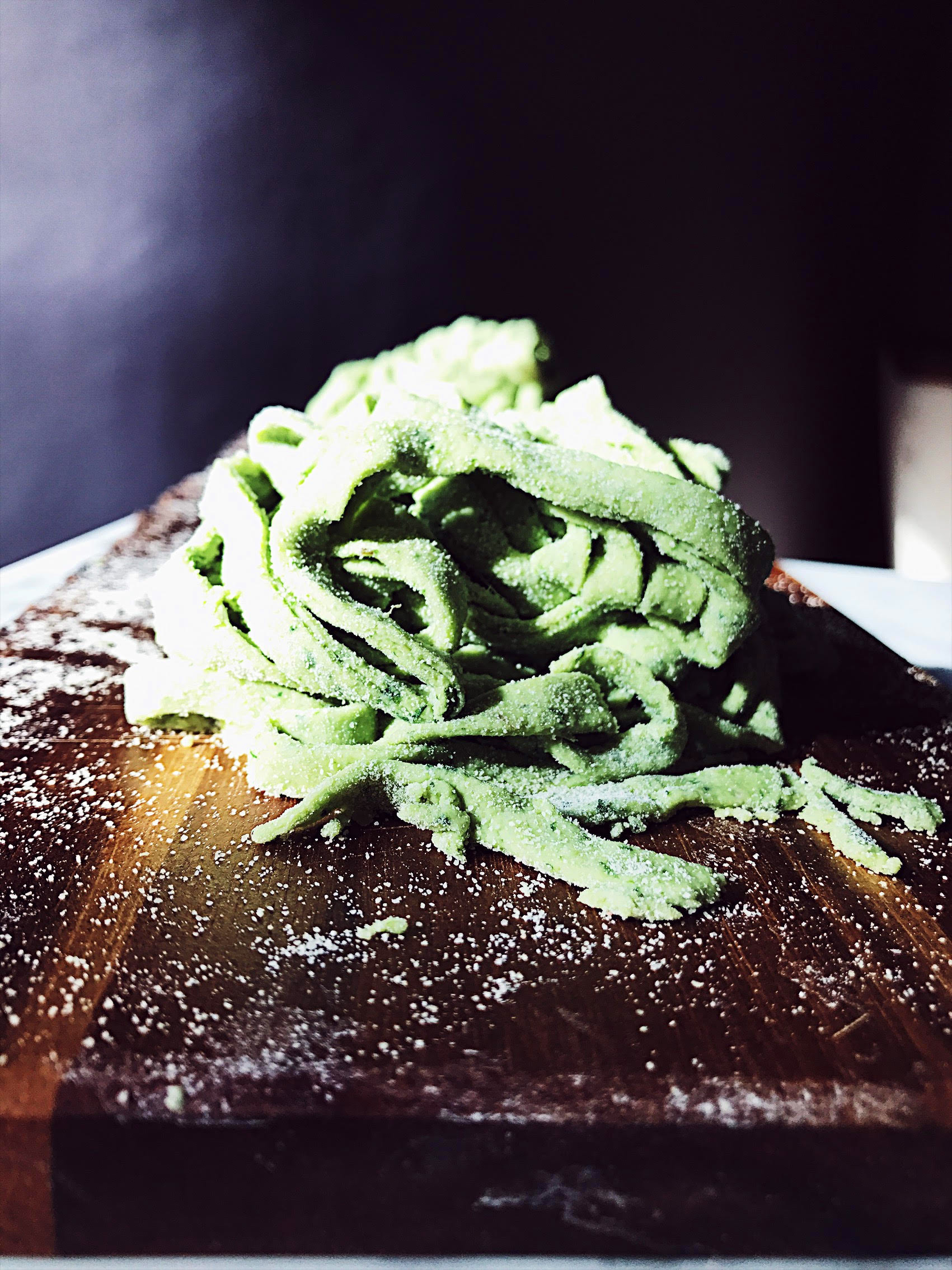
Traditional Semolina Pasta Dough
Semolina pasta requires just a few ingredients: semolina flour, 00 flour (plus a little extra for dusting), water and salt.
Unlike many fresh pasta recipes from northern Italy, semolina pasta is made without eggs. Durum wheat semolina contains more protein than soft wheat flour, creating a dough that is naturally elastic and holds its shape beautifully during cooking.
You can knead the dough by hand on a wooden board or use a stand mixer fitted with a dough hook. I usually recommend finishing it by hand anyway.
Believe me: it is healing.
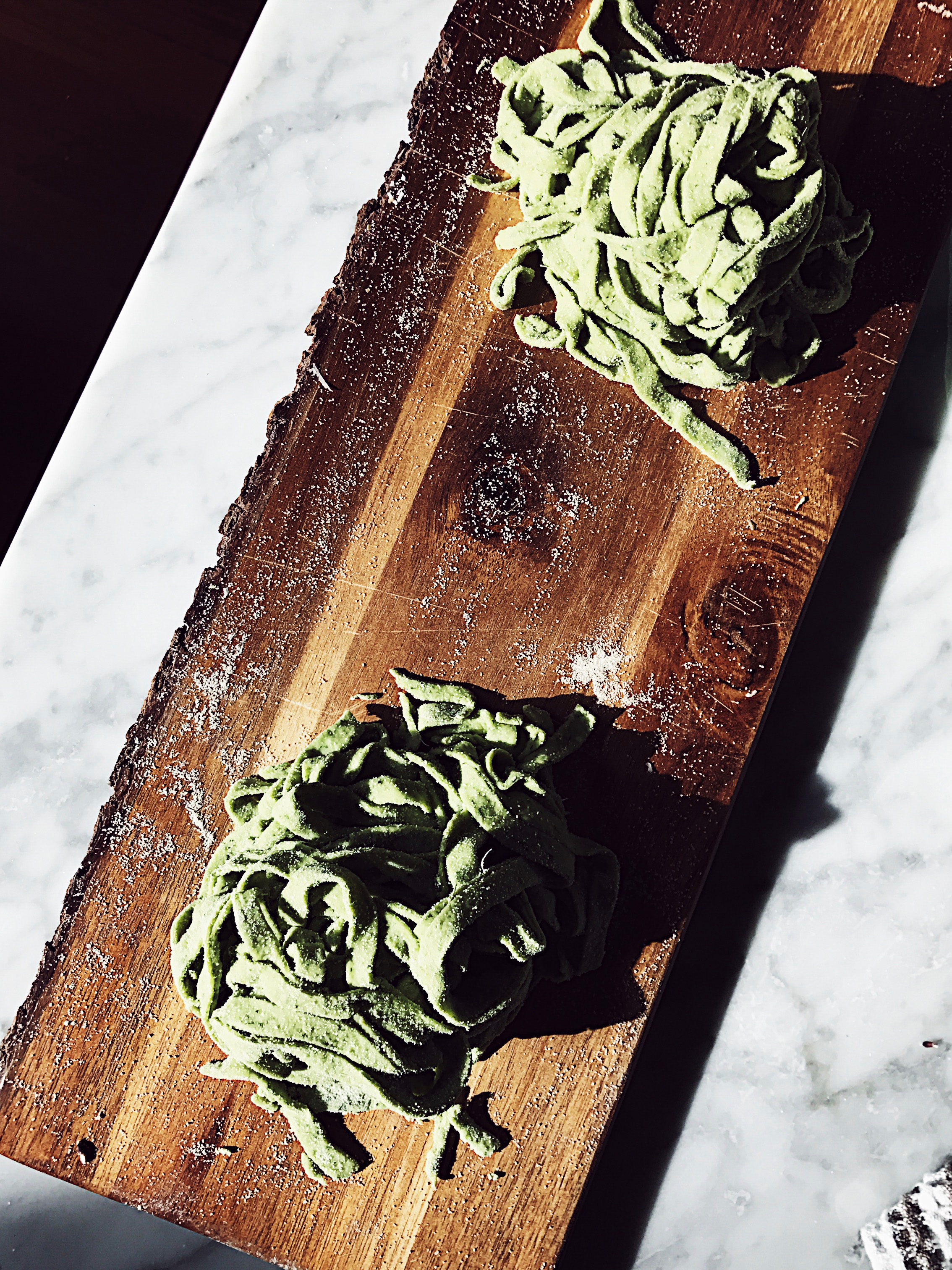
A Green Pasta for Spring
I know I just said that the smell of flour is enough.
But what if you could pair it with another childhood aroma?
Plus, let me teach you an Italian word: contraddittoria. I am contraddittoria. Not because I’m Italian… or maybe because I am. Either way, it’s fun. Try it!
For this version, I blended fresh basil leaves directly into the flour. The flavour remains delicate, but every time I make it, the kitchen fills with the unmistakable scent of freshly picked basil. It instantly reminds me of Italian summers, vegetable gardens, and lunches that seemed to last forever.
Fresh herbs also add moisture to the dough, so you’ll probably need a little less water than you would for the basic recipe.
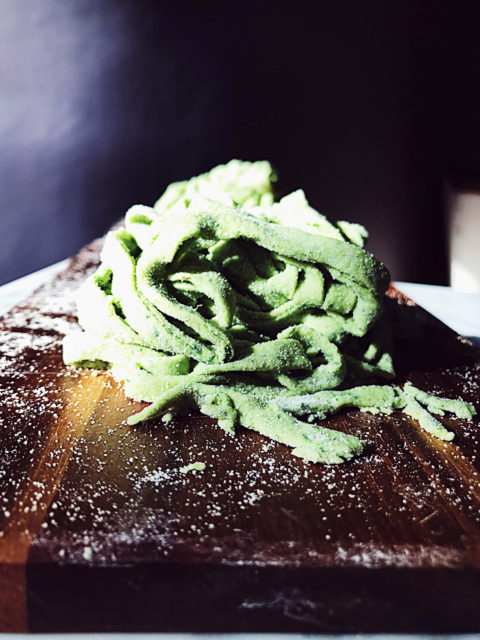
semolina pasta recipe
Ingredients
- 1.5 cups semolina flour
- 1/2 cup 00 flour
- 1 big handful basil leaves optional
- 1 pinch salt
- water
Instructions
-
If you are making basil flavored green pasta, grind the basil leaves - cleaned and dried - together with the flours.
-
Place the flours in the mixer bowl with the kneading hook on, or on a working surface, if you are going to work the dough with your hands.
Believe me: it is healing.
Add salt and water - one tiny tablespoon at the time.
-
Work the dough and add water until you get a smooth and elastic ball, it could take you up to 10 minutes (of manual work).
If you are using the mixer, after the dough gets together and a ball forms around the hook, you will need at least a few minutes of extra handwork.
-
Wrap the dough ball in plastic or a kitchen cloth, and let it rest for at least 30 minutes.
-
Divide the dough into 2-4 equal parts. Flour the working surface and sprinkle some more flour over the dough.
-
Roll out each piece, working from the center outwards, as thin as you can, to get a rectangular shape.
If you are using a pasta machine, start with the wider aperture, if the dough brakes, fold it and pass it through the machine again.
Gradually decrease the width, I usually stop at 7, consider that my machine has 9 sizes.
-
Use a pasta cutter or a pasta machine to cut out long strings of pasta - these are fettuccine/tagliatelle.
-
Place the strings of pasta on a floured sheet until ready to cook.
-
Bring a big pot of water (4 cups of water for every serving of pasta) to a boil and add 1 teaspoons of salt every 4 cups of water, more or less.
-
Homemade pasta cooking time is variable, around 4 minutes, but stay there and wait: when it comes to the surface, it should be ready.
Anyway, taste it and cook it to your taste.
Recipe Notes
To dry homemade pasta, place the shaped pasta on a rack for at least 24 hours. You don't need a pasta drying rack: any rack, as far as it is perforated, should do the work.
You can store it in plastic bags in your pantry up to six months, but be sure it is completely dry.
Enjoy your semolina pasta!
Claudia