
La Fenice is one of Venice’s great cultural landmarks, a theater shaped by opera, fire, reconstruction, and some of the most important names in music.
I just filled up my phone calendar.
One of my favorite October activities is consulting the schedules of all the theaters in Rome and saving the dates, with an alarm set one or two weeks in advance. I certainly can’t afford all the shows, and I’m not sure I’ll be in Rome or free of other plans, but at least I give myself the chance. Plus, I get to skim through everything once and for all.
All this brought La Fenice in Venice to mind.
And so… would you like to take a guided, photographic tour of this extraordinary theater?
First, a little something from my Venice Simposio.

A Theatre That Rose From the Ashes — Twice
“The next, strictly planned, stop was the guided tour of the Fenice Theater.
I love theaters, especially the overly decorated ones.
And this one was certainly not to be missed.
Sure, I would’ve wanted to assist in a performance or a concert, but I knew the time would come.
La Fenice opened in 1792, designed by architect Giannantonio Selva, and soon became one of the great opera houses of Europe.
It’s where Giuseppe Verdi’s La Traviata was first staged—and booed, by the way!
And it’s the venue that, like the mythological bird that gave it its name, was reborn from its ashes.
Twice.
The first devastating fire came in 1836, apparently caused by a recently installed stove.
The theatre was rebuilt remarkably quickly and reopened the following year.
Then, in 1996, another fire destroyed almost the entire building.
This time it was arson.
Two electricians, facing penalties for delays in completing their work, started what was supposed to be a small fire.
They lost control of it.
Only the perimeter walls were left.
Nevertheless, in 2003, the theatre reopened after being reconstructed according to the principle:
Com’era, dov’era.
As it was, where it was.
Back to its original, magnificent state.”

La Traviata Was Born Here
La Fenice isn’t simply a beautiful building.
It is part of opera history.
On March 6, 1853, Verdi’s La Traviata premiered here.
And the first night was famously not a triumph.
Verdi himself wrote afterwards that La Traviata had been a fiasco.
The work, luckily for all of us, had a slightly better future than the audience seemed to predict that night.
Today, it is one of the most performed operas in the world.
Sometimes innovators need a little patience.
Inside La Fenice
But let’s see more.
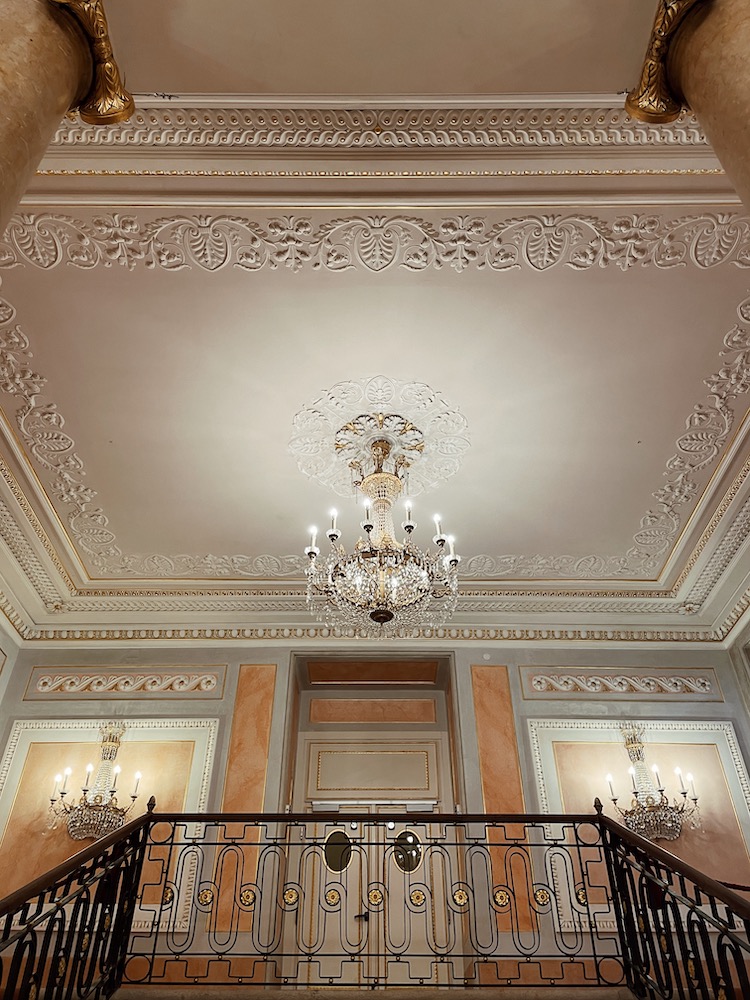
The foyer is just a glimpse of what is waiting for you.
Gold.
Stucco.
Mirrors.
Columns.
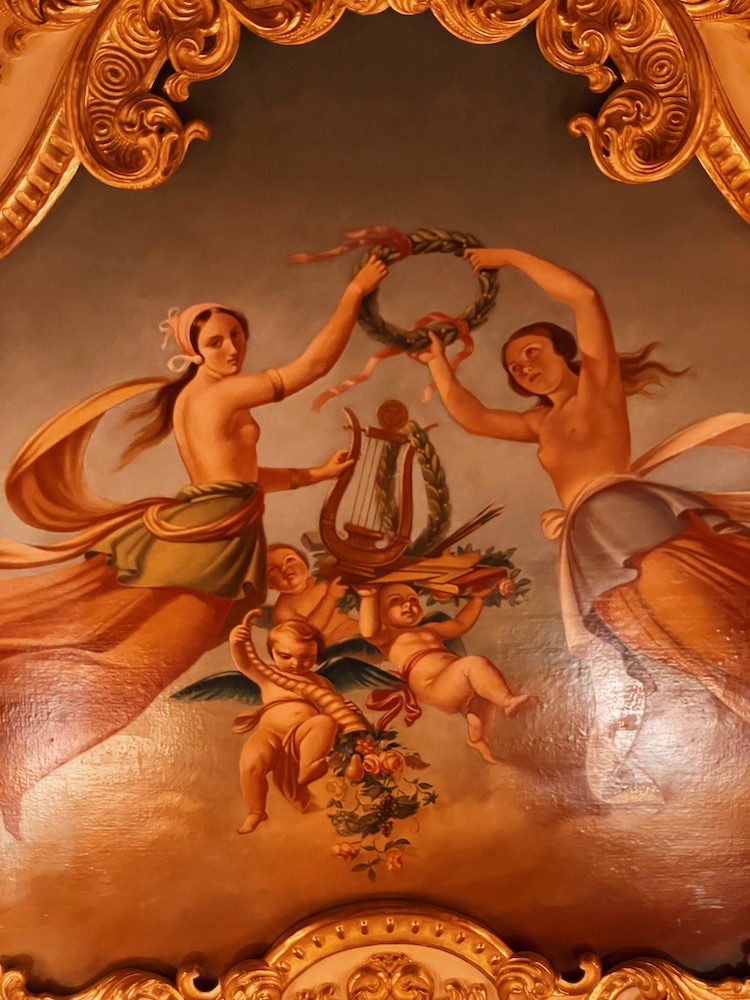
Painted ceilings.
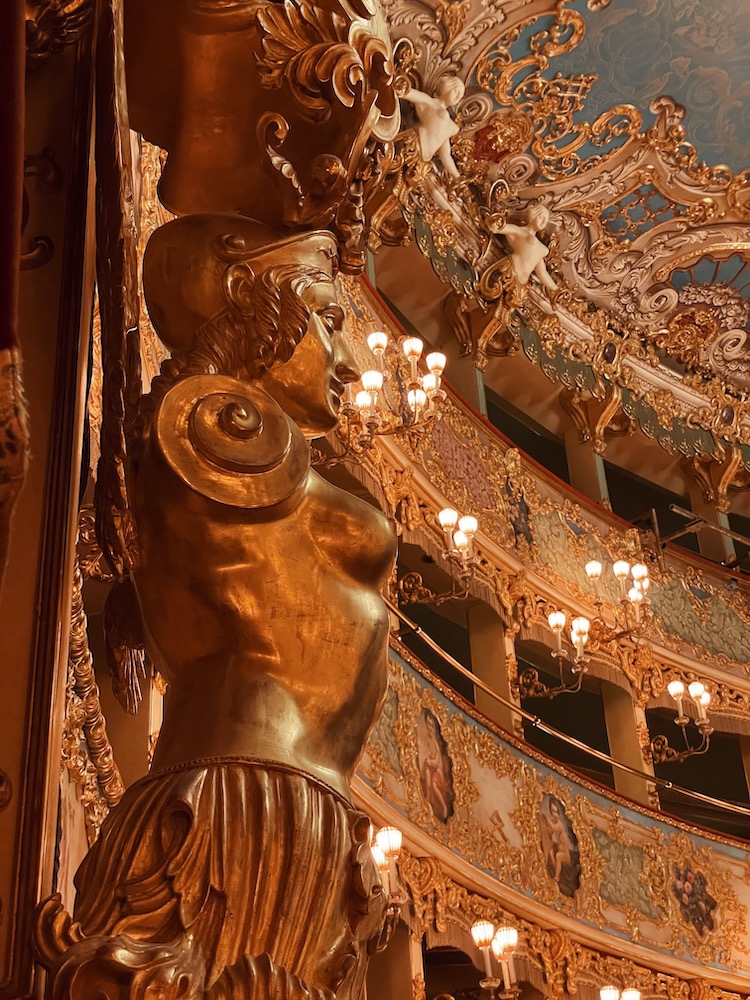
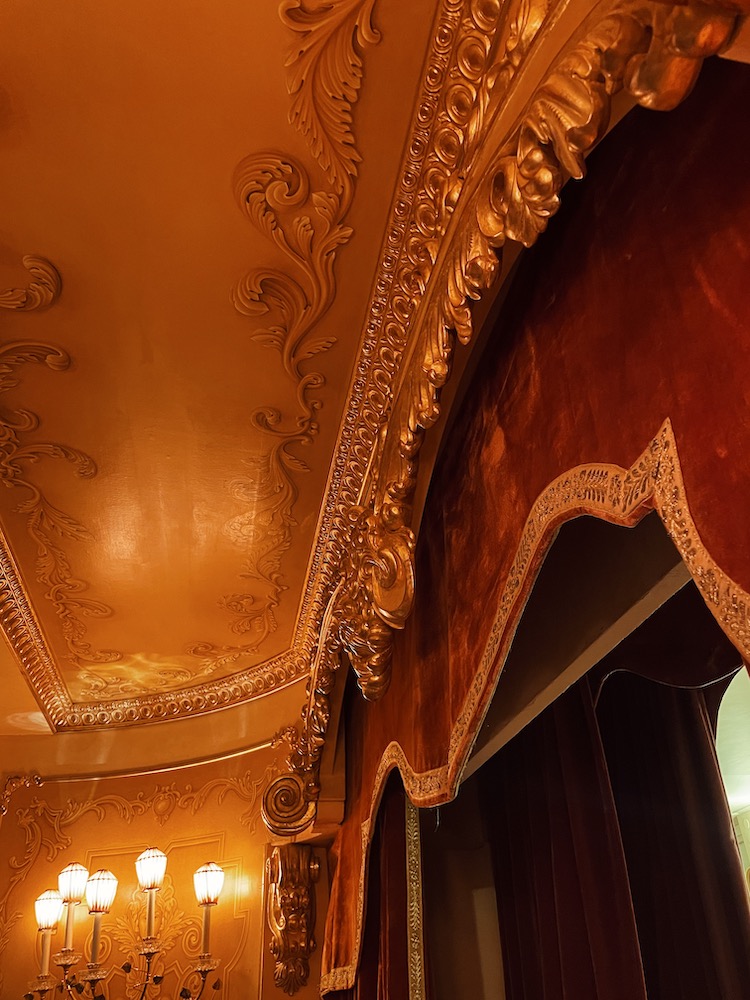
The kind of excess I am extremely happy to tolerate when it comes to old European theaters.
The auditorium itself is a confection of gilding, pale colors, ornament, and red velvet.
You could almost forget there’s supposed to be a performance happening somewhere in front of you.
Almost.
The Royal Box
The royal box is, of course, astonishing.
Its history also reflects Venice’s political history.
La Fenice was born during the final years of the Venetian Republic, so there originally wasn’t a royal box.
One was created later, under Napoleonic rule, and the space changed again as governments came and went.
Today it is exactly what you expect from a royal box.
Magnificent.
Excessive.
Impossible not to stare at.
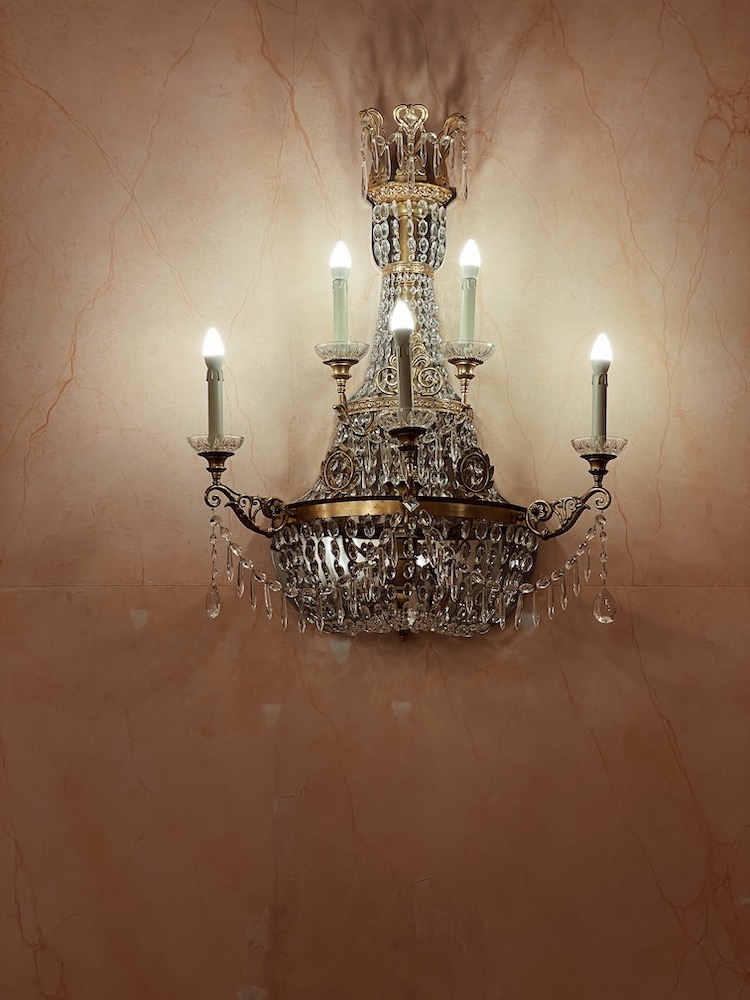
And so is the central chandelier.


Maria Callas and La Fenice
Maria Callas had a strong bond with La Fenice.
One of the defining moments of her early career happened here in 1949.
She was in Venice performing Wagner’s Die Walküre when she was suddenly asked to replace soprano Margherita Carosio as Elvira in Bellini’s I Puritani.
Which is quite a change of repertoire.
She learned the role in a matter of days.
The performances were a success and became one of the episodes that helped establish the extraordinary versatility and dramatic power that would define her international career.
La Fenice later became one of the theatres most closely associated with her Italian years.
Today, part of the theatre is dedicated to remembering that relationship.

The Apollonian Halls
Then there are the Apollonian Halls.
More magnificence.
Obviously.
These rooms were designed for gatherings, conversation, receptions, and the social life surrounding performances.
Because going to the opera was never only about listening to music.
It was about seeing.
And being seen.
Talking.
Flirting.
Negotiating.
Commenting on everybody else.
Basically, civilization.
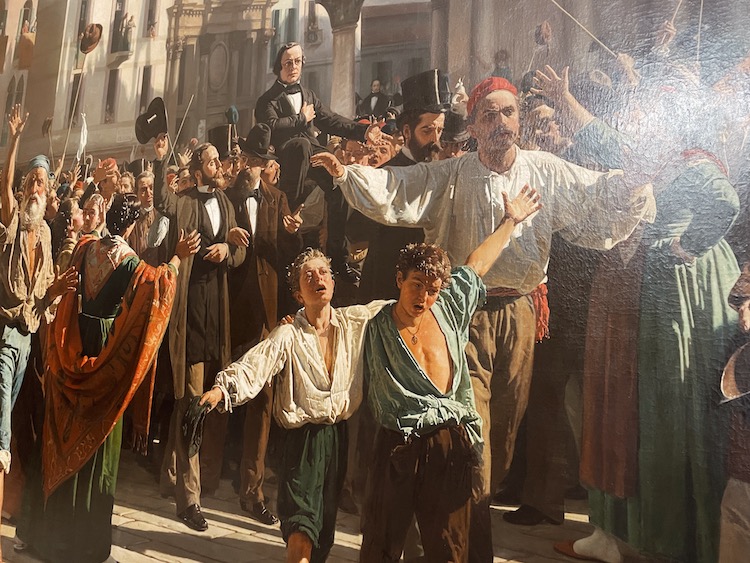
The rooms are also filled with paintings and reminders of Venetian history.
One that caught my attention depicts Daniele Manin and Nicolò Tommaseo being released from prison by popular acclaim, painted by Napoleone Nani.
The two men were among the protagonists of the Venetian uprising against Austrian domination in 1848.
So even here, surrounded by gold, music, and theatrical fantasy, politics finds its way back in.
Why La Fenice Matters to Venetian Culture
A visit to La Fenice isn’t simply a tour of a beautiful theatre.
It brings together many of the things that make Venice so fascinating.
Opera.
Architecture.
Political change.
Social rituals.
International artists.
Fire.
Reconstruction.
And that particularly Venetian talent for turning history into spectacle.
Even its name seems almost suspiciously appropriate.
Fenice.
Phoenix.
A theatre destroyed and rebuilt.
Then destroyed and rebuilt again.
You could hardly invent a better metaphor.
And that’s La Fenice.
I hope you enjoyed the visit!
Baci,
Claudia
This article is adapted from Venice Simposio, my cultural and culinary portrait of Venice through its food, stories, traditions, history, and everyday culture.
