
A taste of Vermouth di Torino is a ritual, an experience.
It begins with a pilgrimage to the wine shop. The only thing you know is that you want the real thing, from Torino. You must rely on the merchant’s good taste, his contacts, and hopefully decent prices.
With your fancy bag, you return home, store your treasure in the cabinet, and wait for the perfect evening.
A rainy one.
A lonely one.
A day when you want only the company of your senses.
Eventually, you open the bottle and give it a first sniff.
It reminds you of chocolate. Not milk chocolate, not dark chocolate — something purer, maybe cocoa. Like one of those fancy pralines with an intricate blend of cocoa and spices, mermaiding you with the promise of seducing your palate.
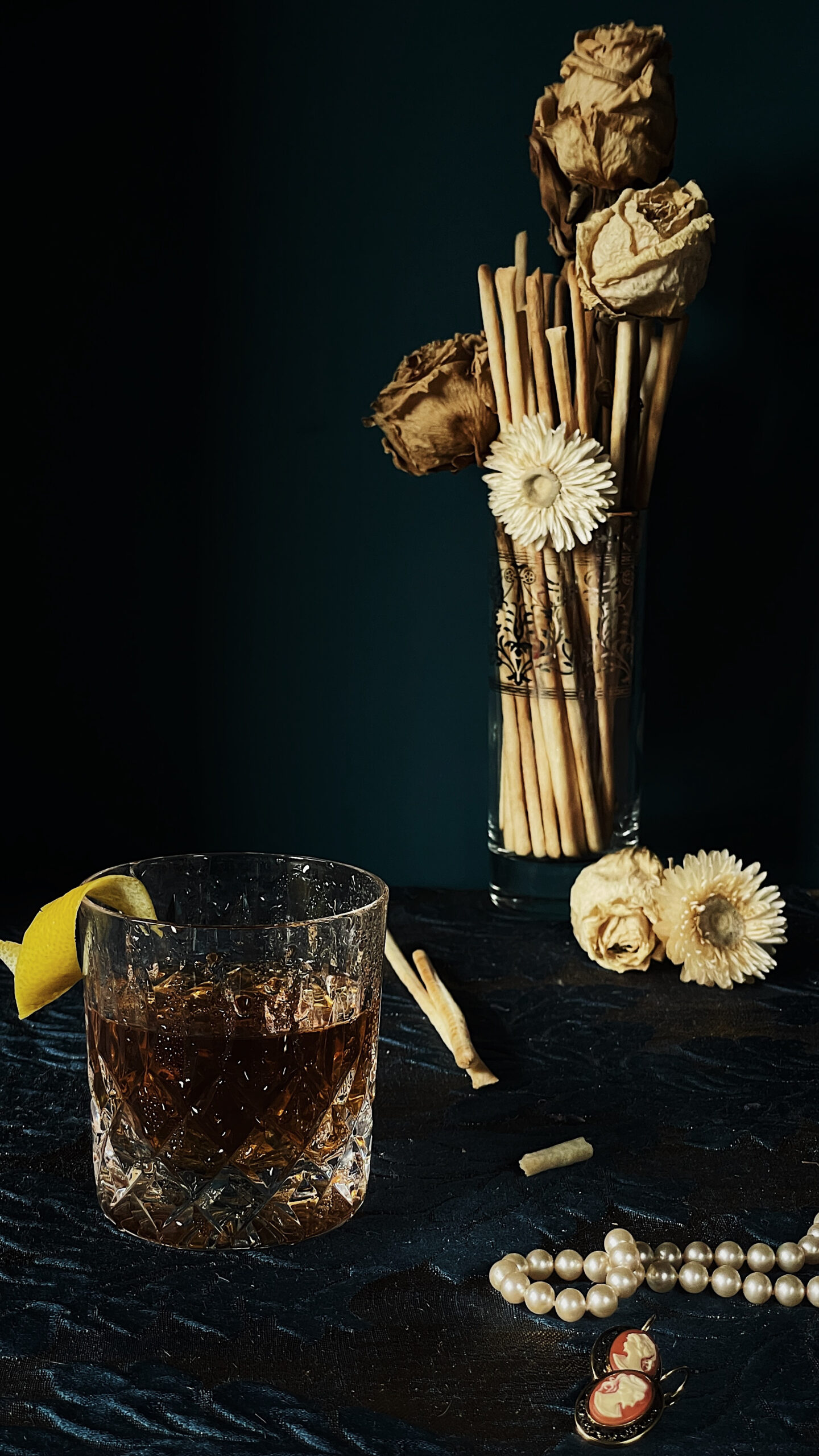
You choose a glass.
Vermouth deserves a beautiful glass, one with intricate etchings, one with a story — perhaps the one you found in an antique shop.
SOLO VERMOUTH: THE RITUAL
You pour.
You admire its amber-caramel color and think how clear and lively it looks. One of the day’s last sun rays penetrates it, and already the promise of seduction is fulfilled.
Now you need an orange.
You peel off a strip of zest, careful to avoid the bitter white pith.
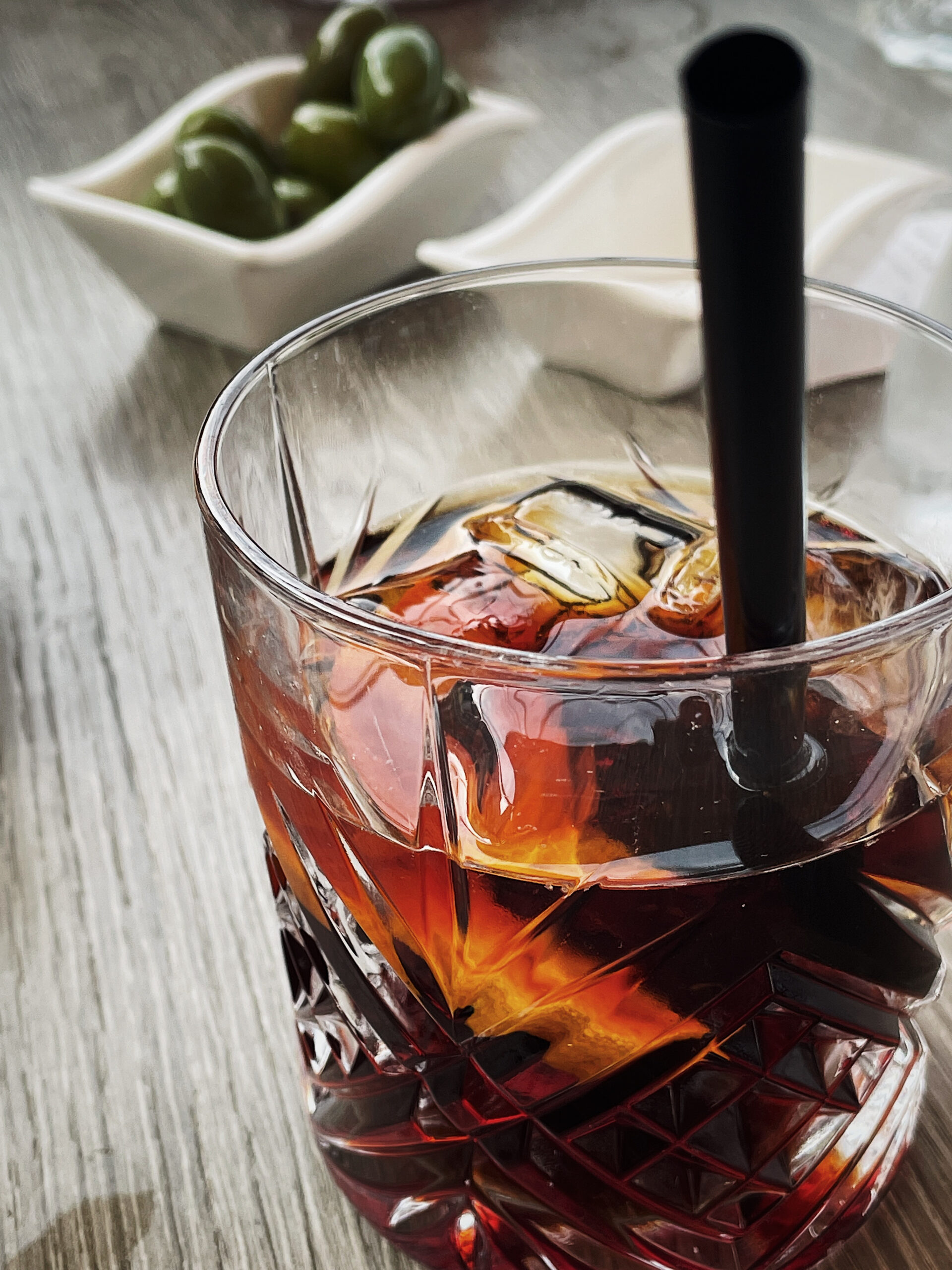
You delicately squeeze it between index and thumb, waiting for it to weep its essential oils and release them over your liquid gold.
Then you fold the zest inside out, rubbing it along the rim, rotating slowly.
Your mouth waters; the scent in your nostrils anticipates the astringency soon to touch your lips.
You crave a second sip.
Yes, you already stole one — sinful, tiny, unrestrainable.
With your first official sip, freshness combines with pungency, both embraced by sweetness.
It is like a love song — not sappy, but passionate, earthy, true love. The kind that roots inside you and changes you.
Then, in a fraction of a second, bitterness explodes.
It wraps your tongue and cheeks, reminding you that true love is also bitter.
A SHORT HISTORY OF VERMOUTH DI TORINO
The roots of aromatized wine are much older than Vermouth itself. Wines infused with wormwood and herbs were known in antiquity, and Turin’s own Pharmacopoea Taurinensis was already describing a Vinum Absinthites in 1736.
But it was in eighteenth-century Torino that the drink evolved from an herbal preparation into the convivial aperitif we recognize as Vermouth di Torino. The name comes from the German Wermut, wormwood — still the botanical at the heart of Vermouth today. Antonio Benedetto Carpano’s famous formula dates to 1786.
At the time, Torino already had an established culture of liquorists and aromatized drinks. Piedmontese wine began to meet wormwood, herbs, roots, spices, and sugar in increasingly sophisticated combinations.
Vermouth emerged.
It became a delicacy of the ruling classes — noblemen and, increasingly, the professionals of the new bourgeoisie.
As demand grew, professional liquorists arose.
Export was a major driver: Vermouth traveled well. It bore witness to Italy’s industrial revolution, the growth of railways, and the nation’s unification.
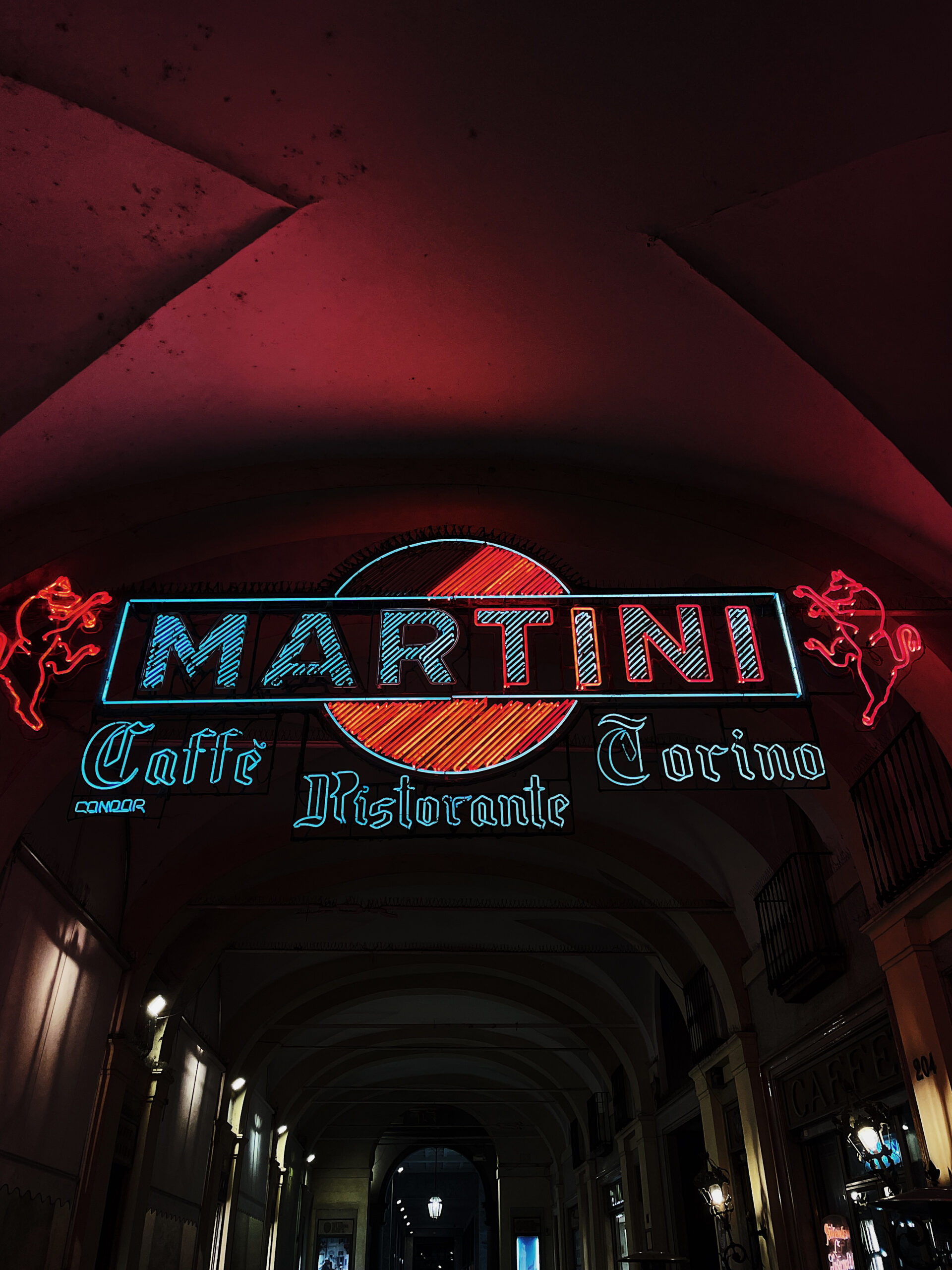
Names like Carpano, Cinzano, Gancia, and Martini & Rossi became inseparable from the history of Italian Vermouth and eventually carried it around the world.
WHAT MAKES VERMOUTH DI TORINO DIFFERENT?
There is Vermouth.
And there is Vermouth di Torino.
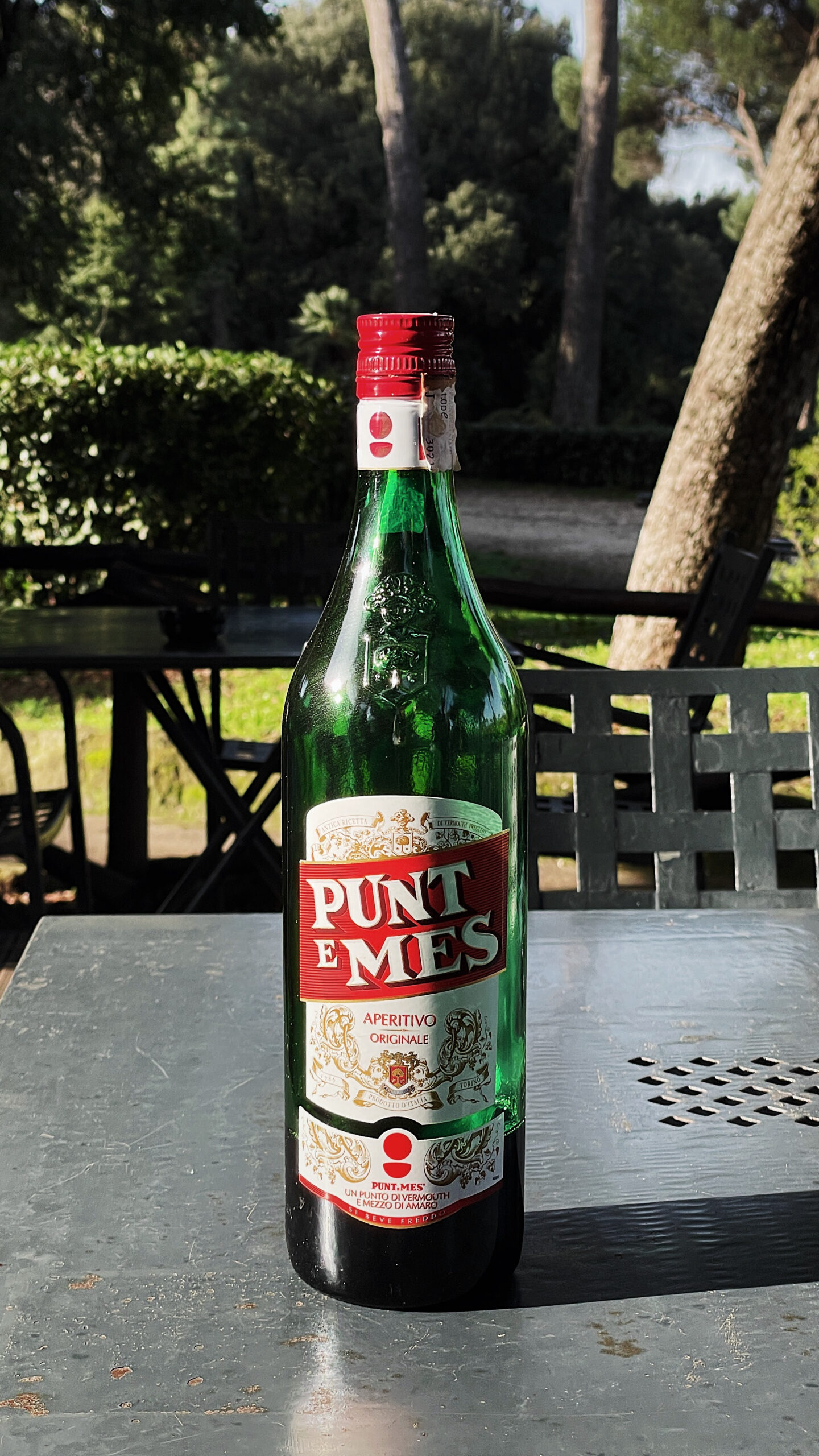
Today, Vermouth di Torino is a protected geographical indication. It must be produced and bottled in Piemonte from Italian wine, and the Artemisia that provides its characteristic bitter note must be grown and/or harvested in Piemonte. The specification also establishes alcohol levels and additional requirements for the Superiore category.
That distinction matters.
Because Torino is not merely a romantic word added to a bottle.
It identifies a place, a tradition, and a production culture.
And, as always happens in Italy, rules are only the beginning.
The producer determines the balance.
The herbs.
The spices.
The sweetness.
The bitterness.
The personality.
HOW TO ENJOY VERMOUTH
Imagine this.
It is dusk, the golden hour.
Elegantly dressed men and adorned women — all wearing hats, polished for the firsts, fancy for the seconds.
They are scholars, writers, artists, traders, lawyers, politicians, decadent noblemen.
They have met at a café.
They laugh, chat, and greet newcomers.
And they all savor, sip after sip, a glorious tiny little glass of Vermouth.
Torino is the historical and cultural heart of this ritual; it was here that Vermouth houses flourished and aperitivo culture developed around them.
One of the simplest old-fashioned ways to drink it is the Vermuttino: Vermouth with a splash of soda and orange or lemon zest, a style already associated with early twentieth-century drinking in Turin.
But good Vermouth can also be enjoyed pure.
Cold, but not anesthetized.
Let it tell you what is inside.
And remember that Vermouth is wine: once opened, keep it refrigerated rather than treating the bottle like a spirit that can sit forever on a shelf.

WHAT TO EAT WITH VERMOUTH
For the sake of research — someone had to do it — I asked the producers of the superb bottle I had conceded myself, Cocchi, for their opinion on the best pairings.
For an antipasto board or an aperitivo, Vermouth works wonders with goat cheeses or with Parmigiano Reggiano aged at least twenty-four months.
But Vermouth also mates perfectly with chocolate. Torino’s chocolate, of course. So if you need a smattering of its history and culture, you’ll find it here.
Simply accompanying truffles.
Diving into recipes for chocolate ganache or chocolate ice cream.
Chocolate-based cocktails.
Even Panettone.
Which, if you have followed me this far through Torino, shouldn’t surprise you very much.

THE LAST SIP
When you reach the last sip, you’ll want more.
But you’ll know you can’t — or you risk ruining all future encounters.
So you close your eyes, recall what just happened, and lick your lips in search of the last lingering particles, tying the sensations to your memory.
You know it will never again be like your first rendezvous.
Too many rational variables will intrude.
It will be gone, forever.
That’s the bittersweet truth of Vermouth and of other loves: first times are destined to pass.
That’s also the grandeur of the finale: the last sip.
You smell the empty glass, trying to prolong the moment, but discover new nuances instead.
Chocolate returns, like a promise of sweetness waiting the next time you open the bottle — in a week, a month, a year perhaps.
Vermouth is to be savored slowly.
For in that bottle coexist vineyards, soil, sunrises, moon rays, raindrops, herbs, spices, and fruits.
They deserve your attention.

THERE IS MUCH MORE VERMOUTH THAN THIS
And this is where I stop.
Because the full story also passes through historic labels and advertising, the great Vermouth houses, cocktails, Futurism, Italianized “polibibite,” botanicals, food pairings, old drinking rituals, and quite a few beautiful glasses.
You’ll find the rest in my Torino Simposio, where Vermouth shares the table with chocolate, the Risorgimento, Cavour, the Countess of Castiglione, Lidia Poët, tramezzini, Futurism, magic, and plenty of food.
Take a look inside the Torino Simposio here.
Claudia