
I like angry people. They are usually passionate. Sure, they’re hard to deal with, but they are capable of great things. If anything, they shake you, make you react, think, do.
So, I can’t help but admire Brunelleschi’s temperament.
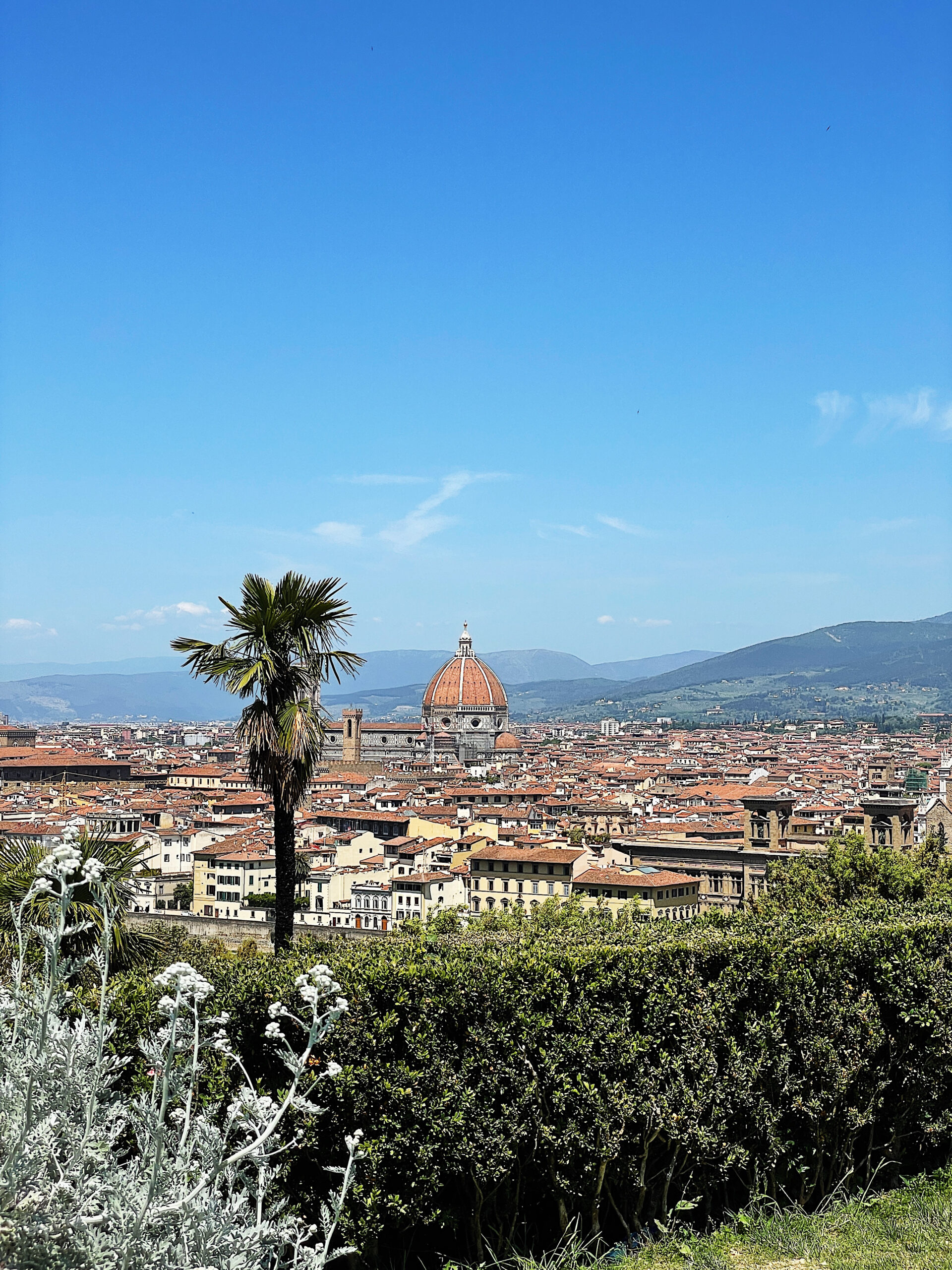
Brunelleschi and the Egg
Imagine this infuriated man being carried out of a meeting about the dome of Florence’s cathedral, Santa Maria del Fiore. Ranting and raving, mouth frothing. (In Vasari’s account, the men who heard him took him for a madman.)
By 1418, when the Opera del Duomo called for designs for the dome, work on the cathedral had been going on for more than a century. Filippo assured them he could build it without full wooden centering, the great timber framework that would normally hold the masonry up while it was being laid. A huge saving for the city’s wallet. The commission, not to mention his rivals, demanded proof. Demanded that he give away his secrets.
Imagine the dusty-clothed artist back in the room, challenging the other architects to make an egg stand upright. Then crashing it on the marble to flatten its base and make it stay still. “Anyone could’ve done it that way,” the others complained. Imagine his reply. “But I did it, and you didn’t.”
Filippo feared that by revealing his plans, others might take his place.
Doubtful.
Manetti has him in Rome with his friend Donatello, measuring the ruins. In Vasari’s account, Filippo studies the Pantheon, and the Romans take the two of them for treasure hunters.
Filippo had also experimented with linear perspective. And as if this weren’t enough, he conceived solutions as he went along with the construction.
The octagonal cupola would rise in two shells, one inside the other. It would show the world that Florentines did things their way, and that their way was better. The backbone of Florence’s Renaissance.

Brunelleschi and Ghiberti
Imagine this man furious at having to share the commission with his mortal enemy, Lorenzo Ghiberti. In 1420 both rivals were appointed to oversee construction, alongside the master builder Battista d’Antonio.
Vasari’s Filippo calls in sick. He wraps his head in a bandage, takes to his bed, and asks for hot cloths. If Ghiberti is so clever, he’ll know how to proceed. The masons wait for orders. The wardens come to see Filippo.
When he returns, he proposes dividing the work. Ghiberti takes on a chain meant to bind the masonry. Filippo takes on the scaffolding for the men. Once Ghiberti’s section is ready, Filippo lets it be known that it won’t bear the weight.
A cathedral document from 1423 names Brunelleschi as the dome’s inventor and chief supervisor. Ghiberti’s duties were reduced in 1426, and he held his appointment through June 1436.
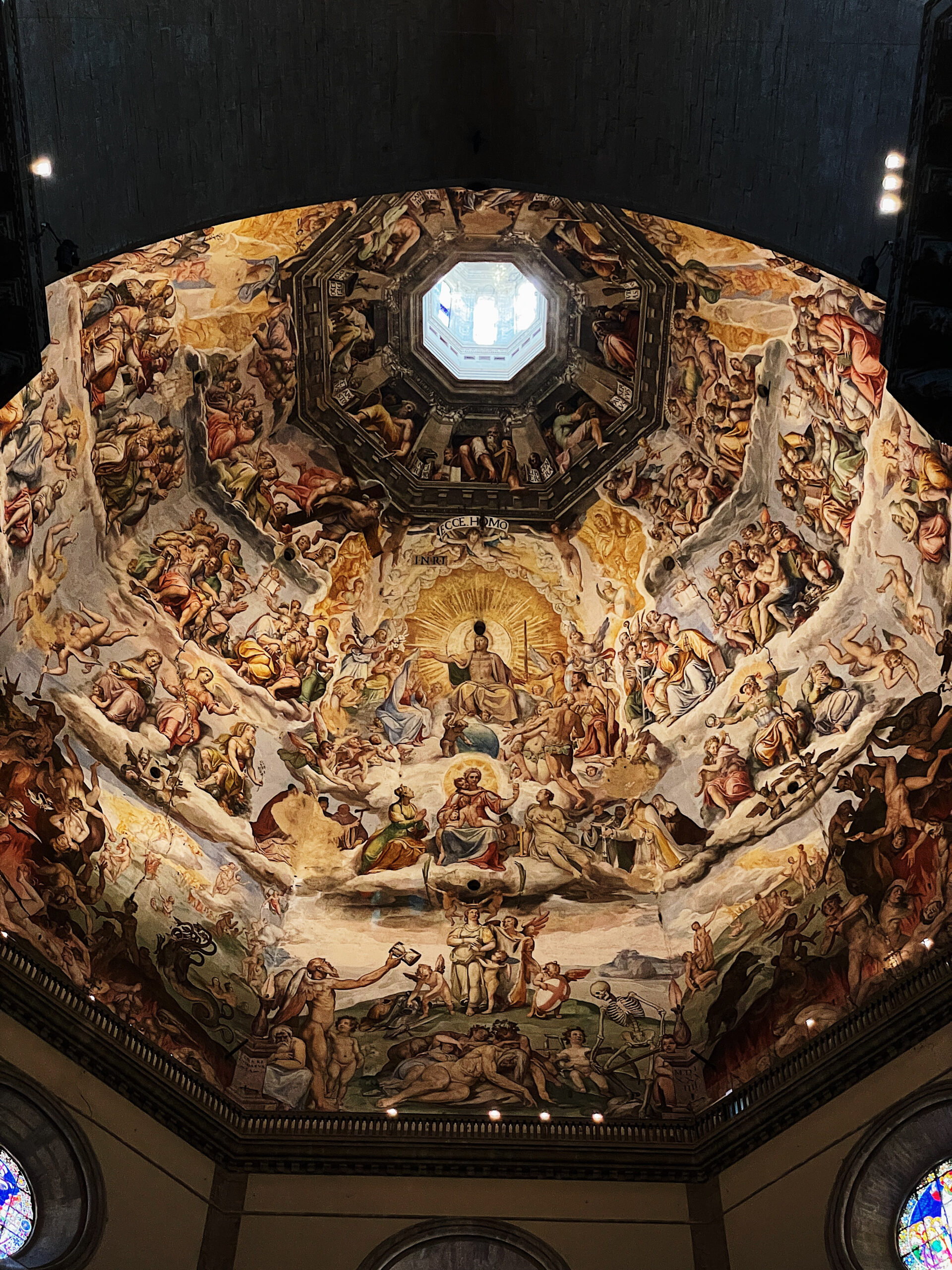
Was It Avarice?
Vasari also tells of masons who refused to go on without higher wages. Imagine this architect dismissing the crew and bringing in men from Lombardy. When the first crew came back, they earned less than before.
But mostly, imagine this genius so attached to his talents that he was unwilling to share all he knew.
Was it avarice? Was it pride?
Was it arrogance, stubbornness, or self-defense?
Or was it the awareness that, in a time and circumstances like his, no one else would make sure he got the credit?
In my Florentine Inferno, I put Filippo among the avaricious. No matter the reason, he’s here, rolling his rock.

Peposo and the Kilns of Impruneta
The terracotta tiles of the cupola came from Impruneta, a village south of Florence. Antonio Manetti, Brunelleschi’s biographer, writes that Filippo went to the kilns to oversee the making of those tiles.
In the local legend, the fornacini, the people who fired the terracotta, cooked a stew slowly in earthenware pots by the kilns. Filippo tasted it, and the tale has him offering it to the men working on the dome. In one telling of the Impruneta legend, Filippo himself suggests adding black pepper. Vasari even writes of places to eat up in the cupola, to spare the workers the climb down for their meals.

Filippo’s Menu
The menu I dedicated to Filippo in my book dedicated to Florence, revolves around the peposo, a beef stew with plenty of wine and black pepper. I cook it with Chianti. If you find beef cheek, add some. The collagen breaks down as the meat cooks and gives the stew a creamy consistency.
It’s so intense that it must be savored almost alone, accompanied by toasted bread or boiled potatoes and a vegetable side dish, like green beans brightened with a little tomato sauce.
Since we are up on the dome, devouring our nutritious stew, it is fair that we end our meal with schiacciata con l’uva, a focaccia filled with juicy grapes, seeds and all, so we can play at spitting out the seeds and watching them fall down, down, down…
I first told Filippo’s story in my Florence Simposio, where you’ll also find the recipes for his menu.
Claudia