
Five Lands on the Ligurian Coast
Liguria has two rivieras: the Levante, stretching east from Genoa toward La Spezia, and the Ponente, extending west from Genoa toward the French border.
Cinque Terre belongs to the first. Its name literally means “five lands,” though Monterosso, Vernazza, Corniglia, Manarola, and Riomaggiore are in fact towns. In earlier times, people referred to them as lands in the sense of distant lands—so isolated from the rest of the region they seemed. To reach these villages, one had to arrive by sea or take winding trails—now manna for hikers and excursionists.
Today, access is easier.
Trains—modest but efficient—connect the villages in a matter of minutes.
Forget the car: driving means longer routes, salati, expensive, parking (in Italy we say “salty” for steep prices), and long walks down to the villages.

Poets, Artists, and the Cinque Terre
In 1997, the Cinque Terre became part of a UNESCO World Heritage Site. This recognition came relatively late, considering that poets, writers, painters, and intellectuals had already found inspiration here.
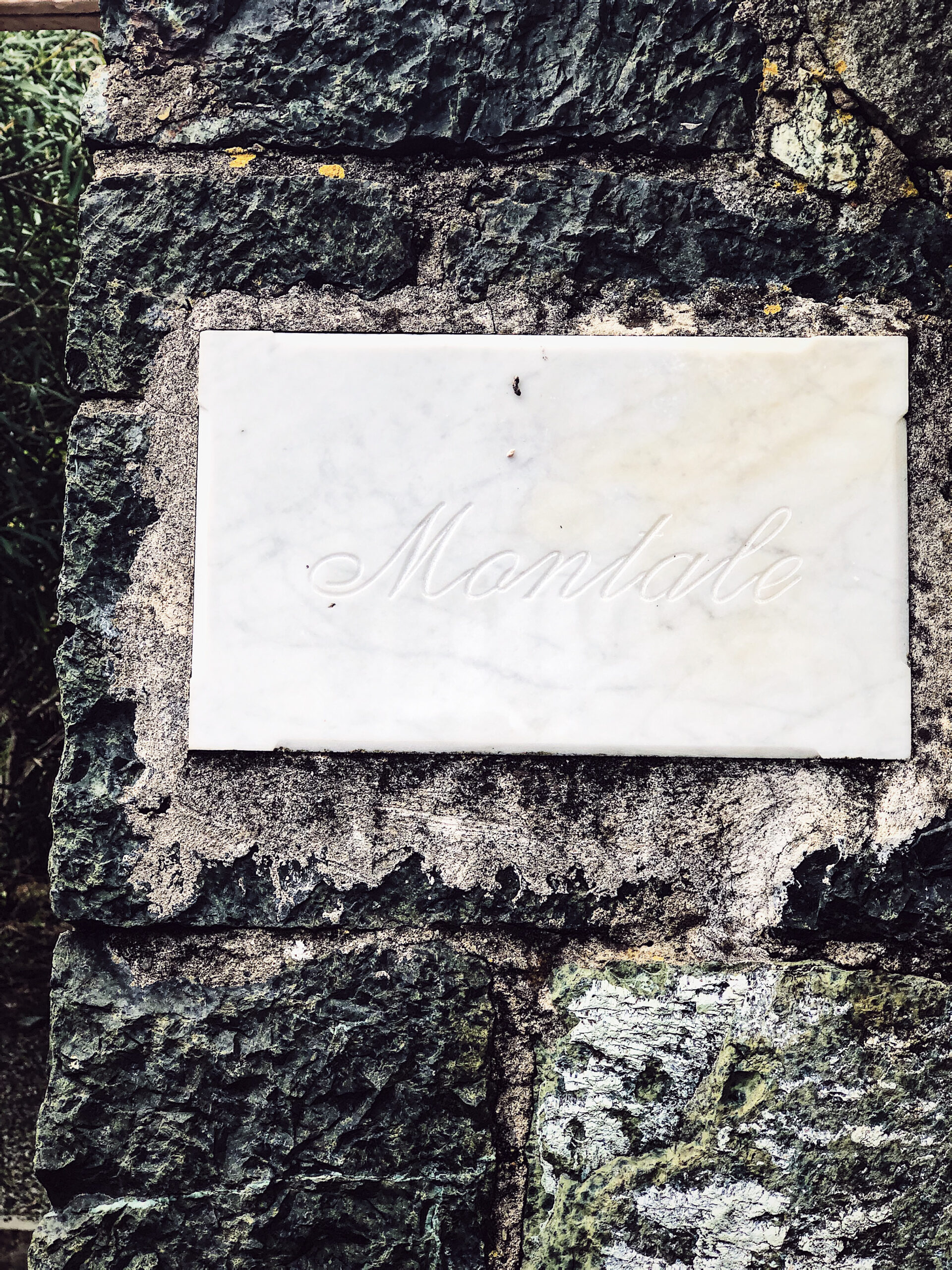
Eugenio Montale was one of them.
From all over the world, romantic souls came in search of inspiration in the sea foam, creative idleness beneath the foliage, and artistic soul mates.
They slept in fishermen’s or farmers’ homes—some in villas already built by wealthy Italian families. They gathered in the piazzas or at the marinas, ate anchovies and potatoes, drank Sciacchetrà (the local white dessert wine), and sang its praises. Giosuè Carducci once described it as “the essence of all dionysiac inebriations.”
Seeing Beyond the Crowds
What remains today is the memory of that time, a melancholy for what we missed, and crowds.
Yet, if we keep this in mind, we can make our visit different. We are fortunate to have sensibility and imagination. Paired with the landscapes, the breeze, and the pastel colors, these gifts allow us to see more than mass tourism permits.
We can see beyond the throngs.

Poetry, Photography, and Local Artisans
We can sit on a rock and read a poem by Eugenio Montale.
We can photograph an old sign as a tribute to artisans.
We can seek authentic souvenirs, crafted locally, and avoid tourist traps.

Food and Cultural Encounters
We can taste regional ingredients and understand why—and how—the local culinary culture was born.
We can search for traces of the theatrical experiments in Corniglia, and discover what was born from the raw spontaneity of locals meeting the openness and enthusiasm of creatives.
In short, we can look up at the sky, out to the marine horizon, and deep into the best part of human nature. After all, that is what earlier visitors sought when they arrived to find only five poverty-stricken fishing villages.
We can still perceive beauty where others see only the ordinary—or fail to see at all.

I tried to give you a taste of all the above in Cinque Terre’s Simposio, accompanying it, as usual, with more tidbits to make your path into Italy’s culture a bit sweeter—or should I say oily?
Enjoy your cultural adventures in Cinque Terre!
Claudia