
On our first aperitivo in Riomaggiore, after asking the waitress for an authentic, local, non-touristy wine, we were lucky enough to find someone who truly understood what we were looking for. She brought us a bottle of Cinque Terre wine from the Possa winery and said: “This is made up there,” pointing to the rocky cliffs just above us.
As we dipped bread into a bowl of pesto and sipped this dry, sapid, mineral wine, we googled the winery and discovered Heydi.
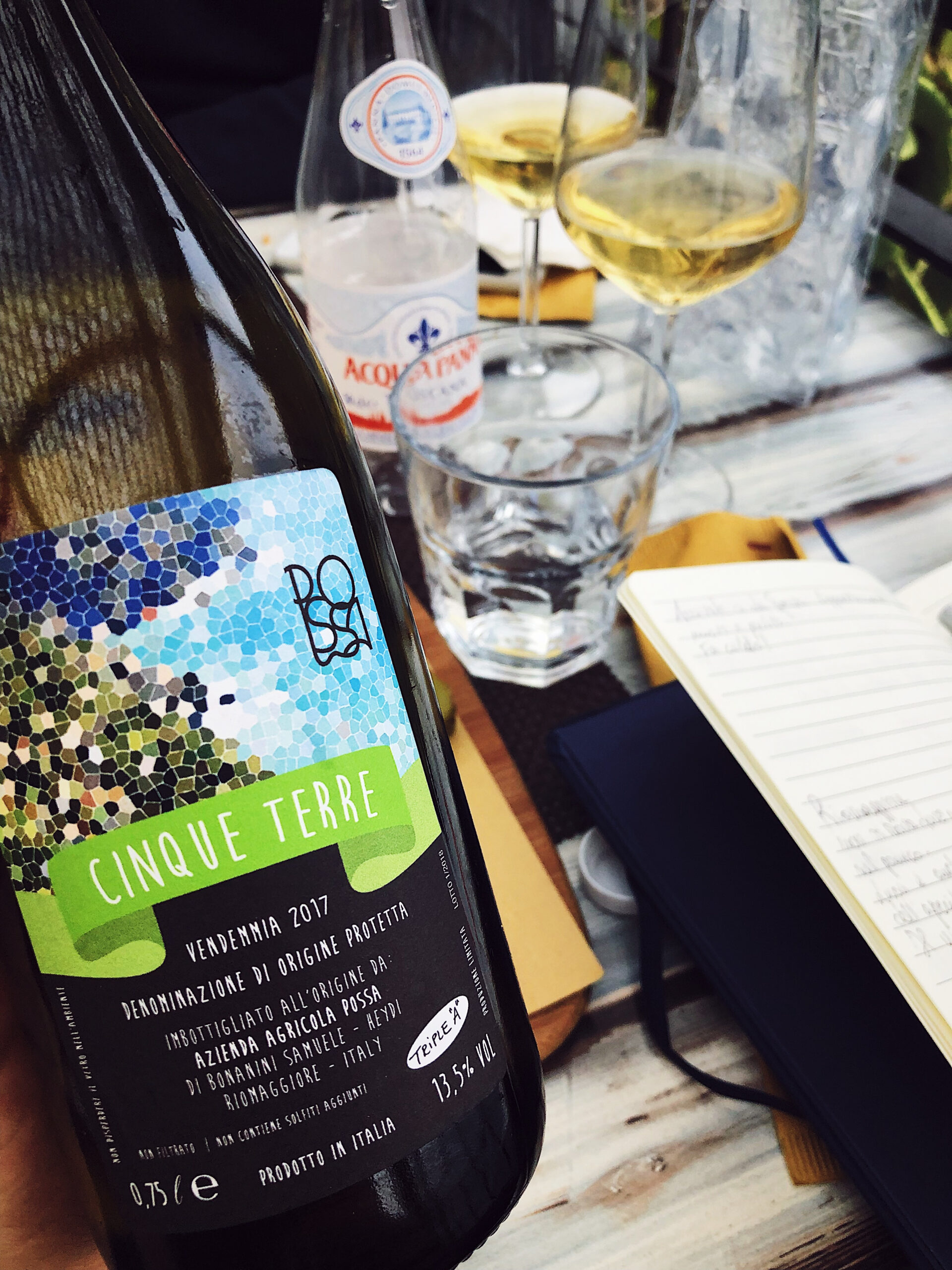
Making Wine on the Cliffs of Cinque Terre
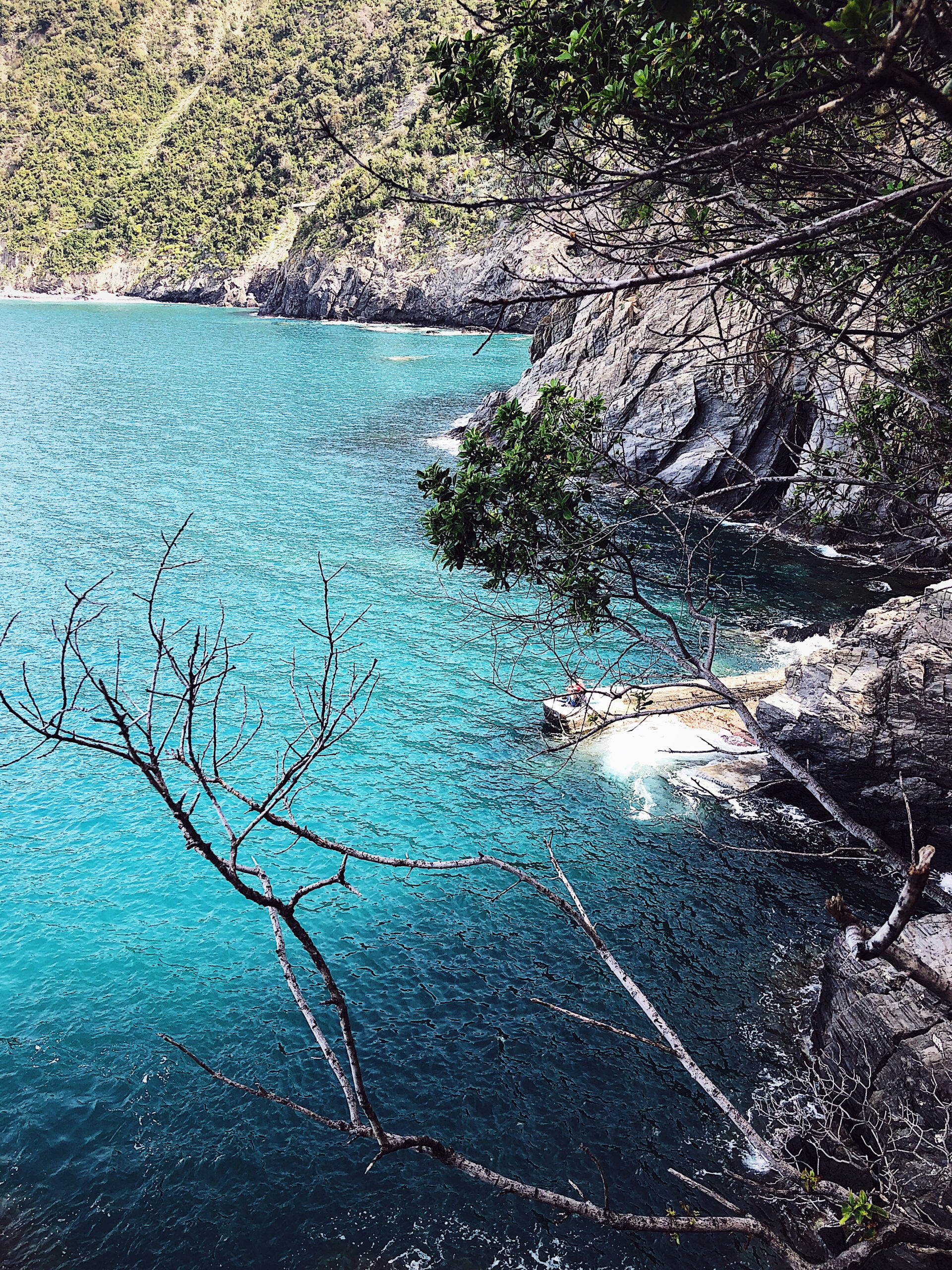
Since 2004, he has devoted himself to a single goal: restoring to Cinque Terre the very wine that once made these lands famous worldwide. When it was a land of poets, painters, songwriters and, most important of all, great workers. Did you know that this really tiny portion of the Ligurian coast has an estimated 6,729 kilometres of muretti a secco—stone walls built by fitting stones together without mortar—that, laid end to end, would stretch farther than the distance from the centre of the Earth to its surface?
So, when I was looking for someone to interview for this Simposio, I knew exactly who to call.
Here’s my conversation with Heydi, the artist behind the bottle. And I say artist because making wine in such a challenging environment means not only growing the vines, harvesting the grapes, and turning them into wine, but making all these tricky steps—we are talking of slopes, of menacing winds from the sea, of changing weather—lead to a good, or better, excellent result. It takes an artist.
Belonging to Cinque Terre
Claudia: What do people generally say about those from Cinque Terre?
Heydi: I suppose they say we’re the rudest of all Ligurians.
I’m used to this response from many of the people I’ve met and asked, especially when I’m in the northern regions of Italy. Maybe because I most often opt for makers of something, usually related to the land (quite often wine, I must admit), or maybe because life is trickier and the weather more challenging—and fundamental for agriculture—especially in the northern regions.
And still, guess what. I get along better with these souls. I like their dryness, I like that they say things the way they are. I like that they are mindful of what is going on around them, without subtle and tricky games of the mind that make you an easier target for anything related to marketing, propaganda, etc. Things are the way they are. Nature, especially in a place like Cinque Terre, doesn’t propose illusions; she tells the truth, whether beautiful or atrocious. And this puts everything you are told in a completely different perspective.
C: And how are they, really?
H: Actually, there are two kinds. Some love their land deeply. Even if they work abroad, they do everything they can to stay close, never breaking the bond with their birthplace, always dreaming of coming back. And then there are the detached ones: they can’t wait to leave. Honestly, I believe they’d be disgruntled anywhere.
Heydi’s response brings to mind another of the numerous Italian dichotomies. We love our land, we’d kill anyone disrespecting it. But we are the first to disrespect it. We talk so badly about it. Too many of us leave, it is true, for faraway and promising lands, and only then do we see what others see and we overlooked: that we are the luckiest. That life in Italy isn’t that bad. It only requires (many) compromises.
Are we ready for them (and conscious of them)? Great, we’ll have a long-lasting, happy marriage. If we can’t settle and accept them, but try to fool ourselves into believing things will change… well, you know the answer.

Memories of Riomaggiore: Cellars, Harvests, and Village Life
C: Tell me a childhood memory.
H: I remember when ninety percent of the buildings were wineries. In September, cars would drive into the village for the harvest, loaded with corbe—two-handled wicker baskets. The smell of must filled the air. Now that I think of it, I realize I was too young to truly appreciate it. Today, most of those cellars have become shops or studio apartments. Those of us who swim against the tide are considered a mosca bianca—a “white fly.”
Let me add that this applies to the whole peninsula. In a very simplistic way, black-or-white style, Italians can be divided into the venduti, the “sold-out” ones, those who chase profit at all costs. Disillusioned, but also greedy. And the Resistenza, those who pursue principles, accepting responsibilities—often way bigger than themselves—and who often make little money, just enough to survive.
Again, if I were queen of Italy, with infinite powers, I’d give these people all the support (laws in their favour, laws to protect them, lower taxes, and something else that would come to mind, just give me the chance) that too often goes to the first category.
C: Share something—a character, a saying, or a story—that reveals the culture and spirit of Cinque Terre.
H: There were so many characters who entertained us on summer nights. I always loved working alongside the village elders. While we worked, I listened to their life stories: tales from a Riomaggiore that no longer exists. Even I, who have tried my best to stay attached to tradition and to this land, find it hard to imagine. They spoke of a poor town, where people bought on credit until the next harvest brought money to pay their debts. They told me that you had to wait until Christmas to eat an orange, or until a wedding, a First Communion, or the birth of a child to drink a glass of Sciacchetrà.

Sciacchetrà, Pesto, and the Pleasures of the Land
C: Tell me about a tradition unique to Cinque Terre.
H: Sciacchetrà. It’s the ultimate Cinque Terre experience—the wine celebrated by writers, historians, and poets. But you must drink it here to feel that shiver down your spine.
I still haven’t managed to drink a calice of Sciacchetrà on a terrace facing the sea in Cinque Terre, but I’ve recreated my own personal experience at home. A tiny aperitivo, but with quality ingredients throughout, starting with the bottle my trusted wine-shop friend found for me. I accompanied it with what, after all I had read about the wine, sounded like a good match. Parmesan cheese to contrast the sweetness, pine nuts to recall it and add a bit of umami, fresh basil for a sensory note that, incredibly, clung to everything just by sharing the same vessel.
C: A dish from your childhood?
H: Pasta al pesto.
I understand why there was absolutely nothing else to be added.
C: Describe a perfect night out with friends.
H: In the countryside. A barbecue of fish or meat, a good bottle of wine, watching the sunset over the sea, talking about everything. Laughing, being noisy—without worrying about disturbing anyone.
This too is an answer I’ve been given quite often, and always by hard workers, but those who love their job (or should I repeat, art?). It seems like the harder the challenges, the greater the pleasure of a well-spent day, but also the greater the simplicity needed to be happy. I want to be part of it, you have no idea how much!
C: And a tip, secret, or remedy from your grandparents?
H: Remedies? A hot wool cloth for aches, a spoonful of honey instead of antibiotics, and a glass of Sciacchetrà to cure just about anything. Always things tied to our land.
And here I leave you and me with a question: do we really need all those little remedies for minor everyday ailments that fill our cabinet?
This conversation is part of Cinque Terre’s Simposio, alongside my explorations of the villages, their culture, and their recipes.
Enjoy your wine adventures in Cinque Terre!
Claudia