
VENICE, A SIMPOSIO COOKBOOK
Culture. Rituals. Recipes. Venice.

The word for Venice is opulence. There’s no doubt.
But the word dream suits equally well.
Crowd is another word. And chaos, another one.
Somehow, the latter two make sense with opulence.
Venice has always been excessive, theatrical, contradictory, and profoundly alive. Merchants and sailors brought spices, foods, people, and stories from distant worlds. Nobles filled their palazzi with art and parties. Ordinary Venetians built rituals around the lagoon, the seasons, feast days, markets, and food.
And although the city has changed enormously, there is still a way to get past the confusion.
The word, this time, is culture.
A way to dig deeper.
To understand what you are looking at.
To turn a place into an experience.
STEP INSIDE THE BOOK
Before you decide, step inside.
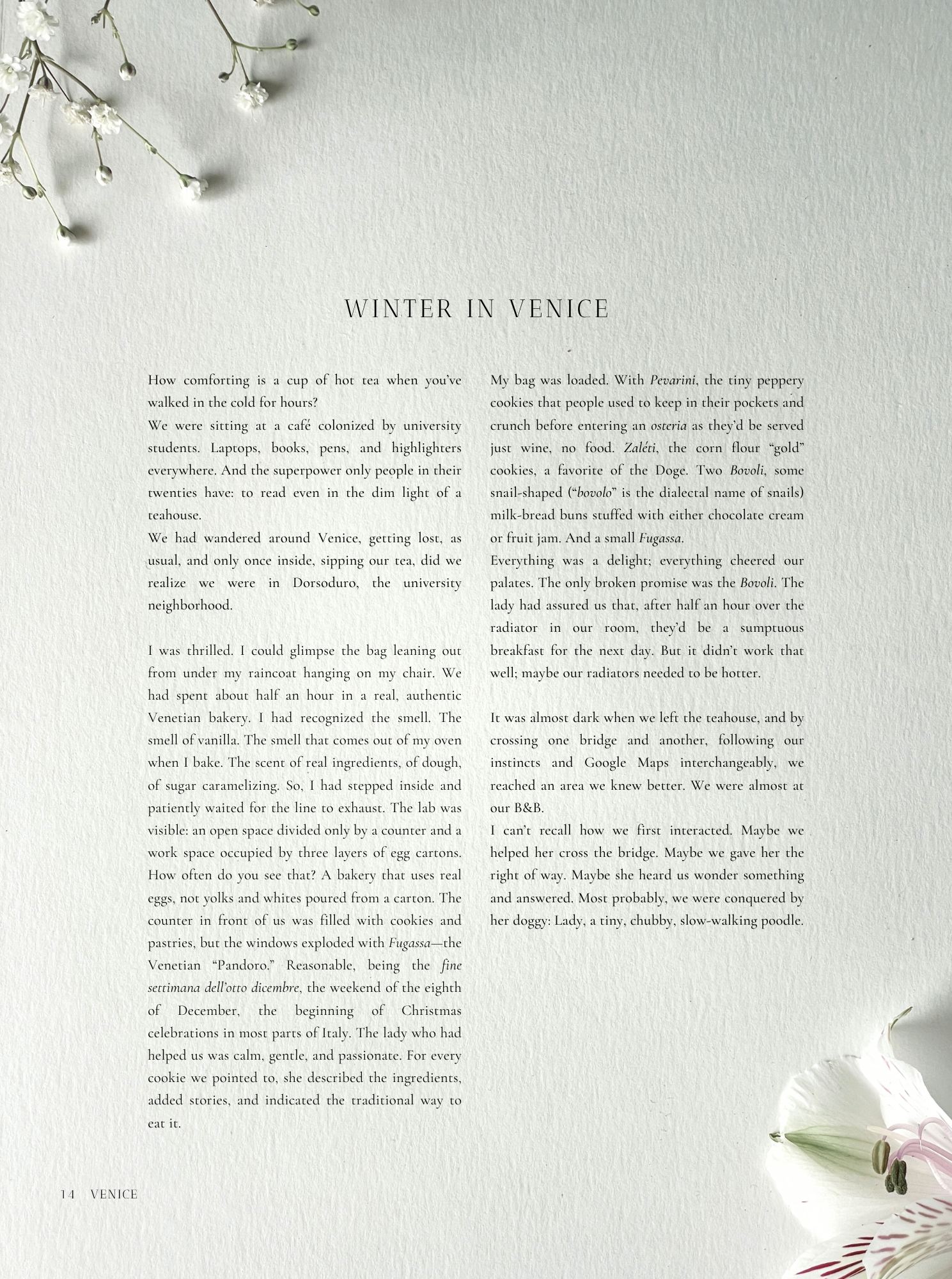
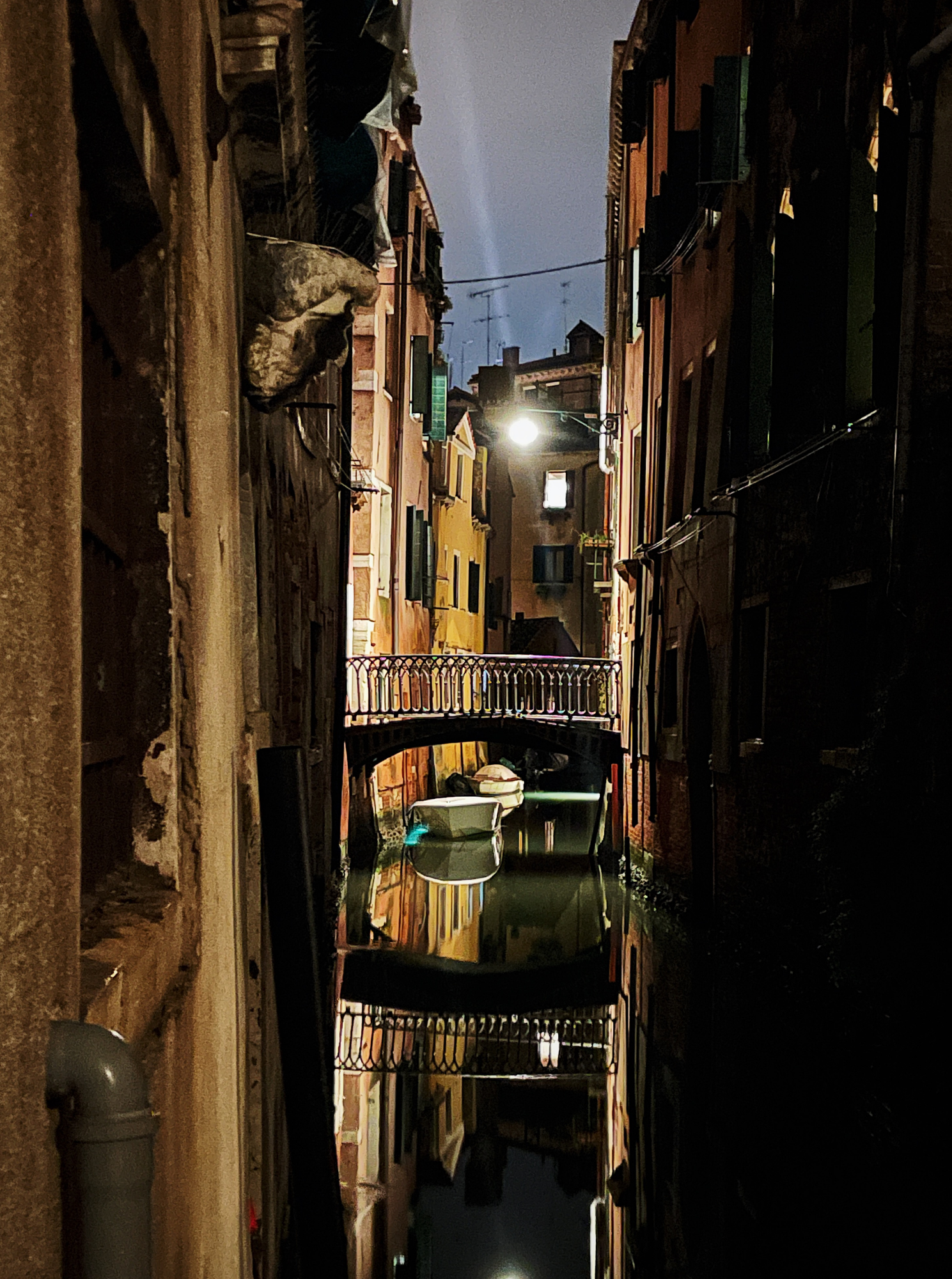
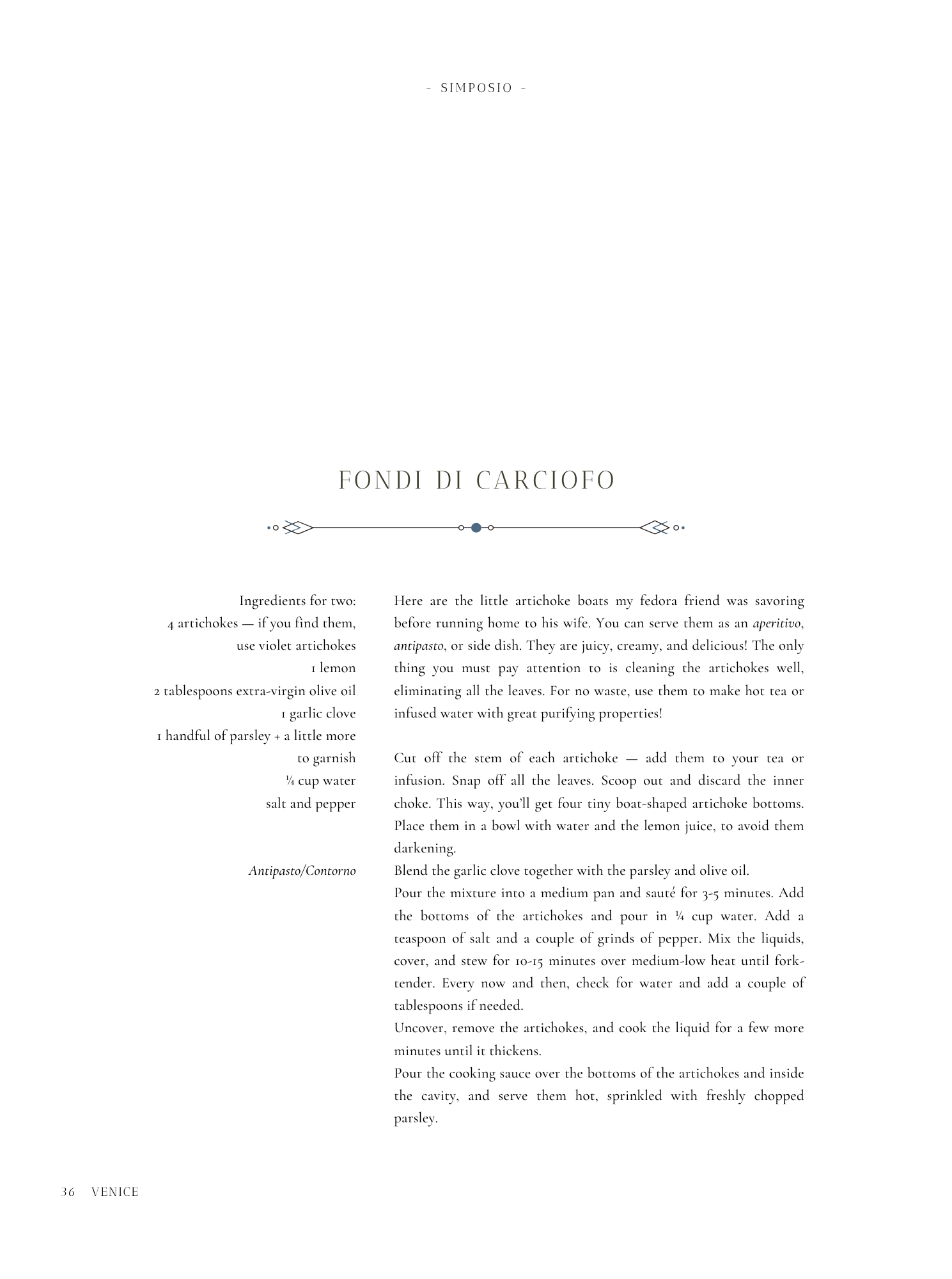
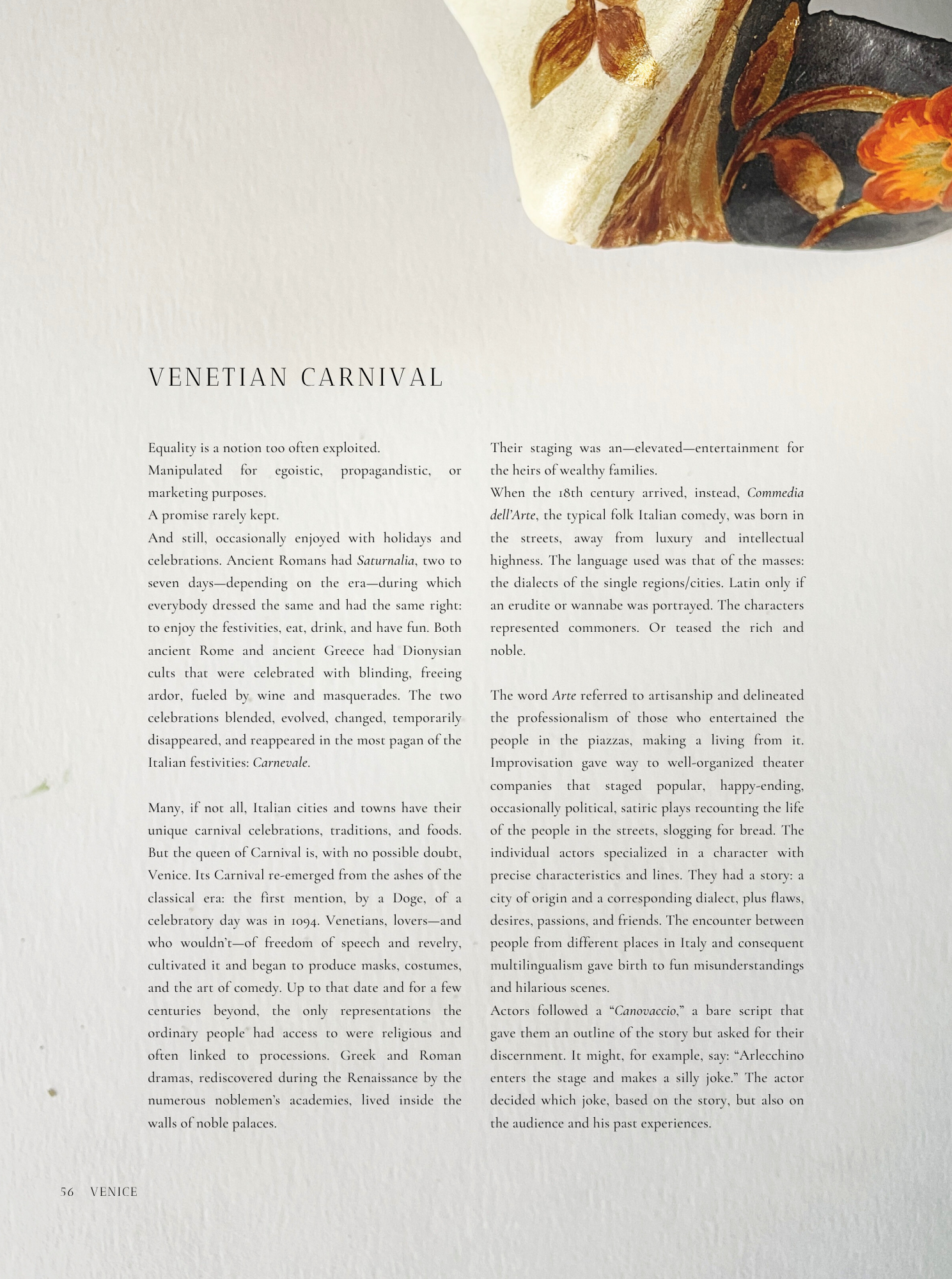
Here are a few pages from Venice Simposio: a glimpse of the stories, rituals, recipes, and everyday culture that shaped my Venice.



Inside this volume:
- Stories and cultural essays that move through Venice past and present
- Traditional and seasonal Venetian recipes, from lagoon to table
- Carnival, masks, bacari, women, Casanova, feast days, markets, and everyday rituals
- Food shaped by trade, spices, religion, geography, and the seasons
- Photography that captures Venice beyond its monuments
- A personal journey through the city, its contradictions, and the things that make it worth understanding
A taste of what you’ll discover
- Venetian Carnival Culture — masks, freedom, anonymity, Commedia dell’Arte, and the human desire to step outside the rules.
Read an excerpt from the book here. - Sarde in saor — where sweetness, acidity, preservation, and the history of the lagoon meet.
- Cicchetti and bacari — small bites, glasses of wine, and one of Venice’s most enduring social rituals.
- Dolce di San Martino — a giant decorated cookie tied to November, children, folklore, and a very Venetian tradition.
Have a first taste of Venetian food culture here. - Fugassa, Zaleti, Pan del Doge, Pasta e Fasoi, Bigoli in Salsa, Castraure, Baccalà Mantecato — dishes that reveal the city one ingredient at a time.
- The influence of trade, spice routes, distant worlds, and the lagoon on Venetian food and identity.
Explore Venice culture and traditions here. - Winter fog, summer rituals, Carnival, local pride, markets, islands, churches, and the quieter rhythm of Venetian life.
VENICE IS MUCH MORE INTERESTING ONCE YOU KNOW WHAT YOU’RE LOOKING AT
Tourism can make Venice difficult to see.
You squeeze through crowds, cross bridges, follow signs, dodge selfie sticks, and wonder whether the city you imagined is still there.
It is.
But culture works like a filter.
You begin to notice what other people don’t.
A mask is no longer just a souvenir.
A plate of sarde in saor is no longer just lunch.
A bridge, a pastry, a saint’s day, a glass of wine, a market stall, a word in Venetian dialect — they all carry something with them.
Some of us will see ghosts from the past strolling the alleys.
Others will picture brocade, wigs, jewels, music, parties, courtesans, merchants, sailors, and Casanova flirting over Prosecco.
Others will simply sit down in a bacaro, order something traditional, and enjoy it more because they know the story.
That, to me, is the point.
THE VENETIAN TABLE
Venetian food tells the story of the city unusually well.
It is lagoon and mainland.
Rich and humble.
Preserved fish and delicate risotto.
Cornmeal, beans, onions, sardines, artichokes, cod, wine, spices, raisins, pine nuts.
There are dishes shaped by necessity and dishes shaped by wealth.
There are recipes born from Catholic feast days, maritime trade, agricultural seasons, and the practical need to make food last.
Inside the book, you’ll find them beside the stories that give them meaning.
Because recipes are always more interesting once you understand why they exist.
WELCOME TO MAGICAL VENICE
My wish for you is to experience all of this.
To feel.
To share it while cooking, while hosting friends or family, while setting the table for a romantic dinner.
To travel through the pages of this cookbook.
And, if you physically go to Venice, to find what makes you happy.
Your respect and the time spent reading, observing, and gathering information will give something back immensely valuable: the fulfilling satisfaction of an inner reinterpretation, of independent thinking, of mindful traveling.
Crowds won’t be a problem anymore.
You’ll be part of another parallel, enchanted universe.
Welcome to magical Venice.
Claudia
Buy Simposio | The Venice Issue on Amazon