
Naples’ culture is thrown at you the minute you step off the train—or any other mode of transportation. It colonizes, unapologetically and continuously, all your senses.
Every step through the maze of streets guiding you to the city center is a step deeper into a surreal world. A world so steeped in its peculiarities that it becomes a dense paste, enveloping you, undoing you, and giving you a second birth.

People, Conversations, and Happiness in Naples
First, you learn that the city and its people are organized in a way you’ll never fully understand. You can’t believe it works. When you’re waiting in line for a taxi, the least likely man—who you thought was there by chance, perhaps waiting for a second or third turn—calls you forward from the third line. And still, somehow, the line moves smoothly. All the people who arrived on your same train are in their cabs, welcomed with huge smiles.
Because that’s another thing about Naples: people smile.
I’m not talking about a made-up, circumstantial smile. I’m recalling those genuinely happy smiles that explode from the soul. A smile you later realize isn’t even for you. It’s for life.
Neapolitans are happy because happiness is part of their nature. They are cheerful because they were born cheerful. They are joyful because they find joy in a myriad of things.
And Neapolitans are kind because kindness follows happiness.
It’s why people tend to assume that Neapolitans are fooling them. We’re so used to seeing the rest of the world frustrated that we can’t conceive of someone else simply being happy and well-disposed toward us. And wait, I’m not saying they might not fool you at some point, but rest assured, it will have nothing to do with that smile, that blissful state, and that happiness. It’s business.
Your taxi driver, a handsome young man—because Neapolitans are also handsome, whether it’s a consequence or a cause of their bliss—will talk and talk and talk (in his unique, melodic, passionate dialect) upon your first question. Any topic related to his city or culture will trigger a conversation, and he’ll be more than glad to share all the latest news, flavored with comments and anecdotes you won’t find in any newspaper, travel guide, or book. He’ll plant the first seed of happiness in your spirit.
So happiness is the first cultural insight to add to Naples’ cultural profile.

The Colors of Naples
The next is color. The city appears to be perpetually illuminated, making colors more vibrant, contrasts more accentuated, and hues more intense.
Plus, the colors are boldly paired and on full display. The vibrant hues of vegetables stacked in crates by street greengrocers. The team colors decorating the streets with ribbons and garlands, painting the hundreds of numbered jerseys sold by street vendors, or covering the walls with street art. The ruby red of hearts hanging in the narrow alleys, inscribed with lyrics from songs or local sayings—designed not only to attract tourists but also to herald the wave of mass tourism, colonizing every detail with the city’s strong personality. And the colorful eyes of the people in those alleys, witnesses to the many past colonizers who were welcomed rather than resisted. All those eyes share a spark of vivacity and cleverness.

Naples Street Food: Following the Smells
After the colors come the smells—mostly food. Naples is a temple for pilgrims in search of street food grails:
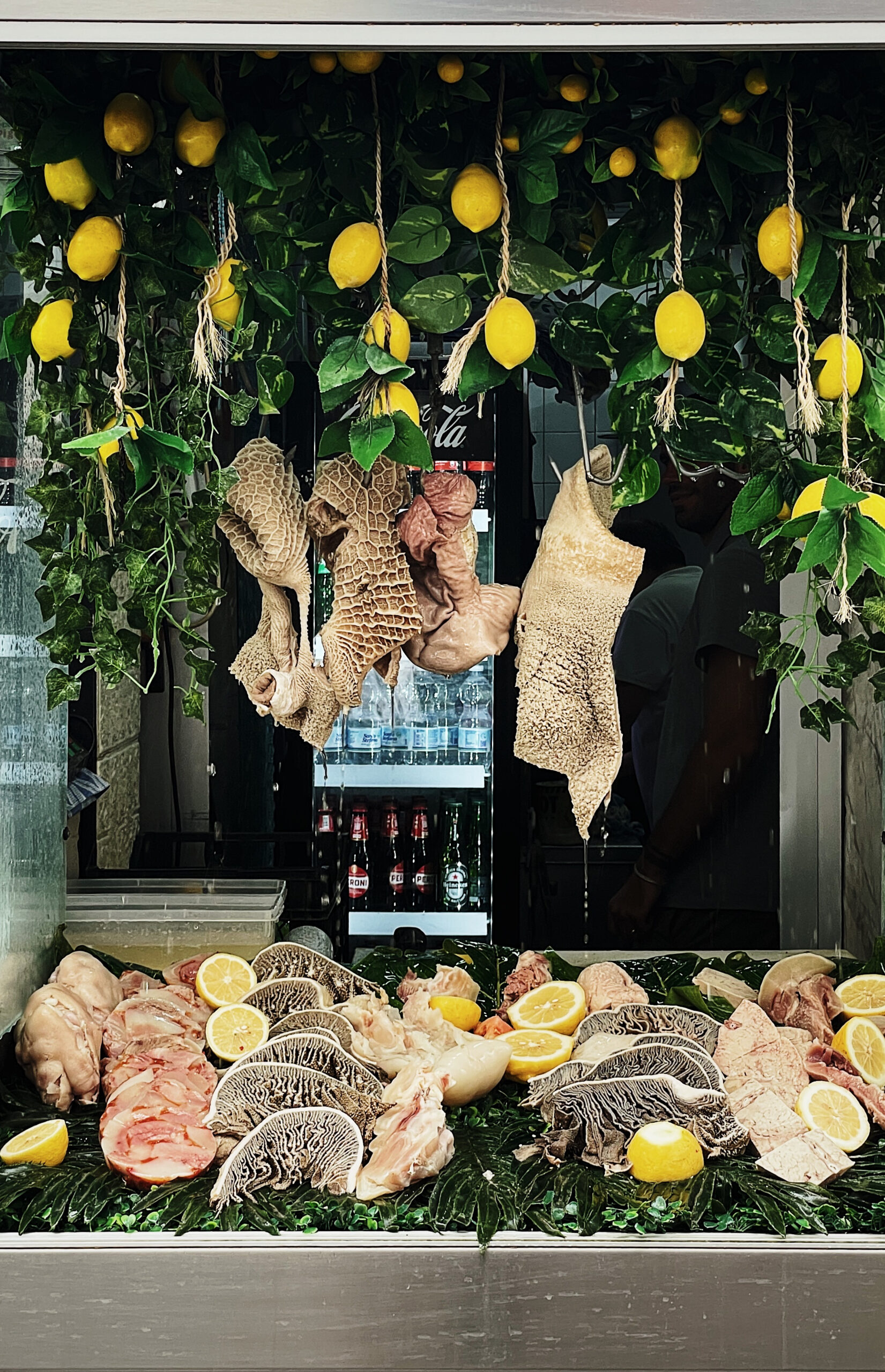
“Pizza a portafoglio” (a whole round pizza folded into quarters for you to savor while strolling around); “pizza fritta,” fried pizza (stuffed and deep-fried, like a calzone); “frittatina di maccheroni” (single-serving pasta frittata); “Cuzzetiello Napoletano” (local cafone bread hollowed out and stuffed with delights like tomato-sauce-soaked polpette); “Cuoppo fritto” (a brown paper cone filled with breaded and deep-fried goodies, usually mozzarella, anchovies, calamari rings, baccalà, potato fries, bread dough, croquettes, rice balls, and various veggies); “‘O Pere e ‘o Muss” (long-boiled pork feet and calf muzzle cut into a salad and seasoned with lemon juice, salt, and occasionally other fancy additions); “Pizzelle di Ciurilli” (ricotta-and-other-cheeses-stuffed, battered, and fried squash blossoms); “Taralli” (sort of pretzels—don’t miss the “’nzogna, pepe e mandorle,” aka lard, pepper, and almonds); “Panini Napoletani” (bread rolls stuffed with salami, provolone, eggs, etc.); “‘O Bror’ e Purp” (wintry octopus broth served in a cup); “Sfogliatelle” (puff or short pastry filled with ricotta and semolina pudding); and “Babà” (leavened sweet bread soaked in rum).
These, together with the smell of coffee from any “bar” or house window (portrayed through my still life print), are all smells that will make your taste buds go crazy and start the battle between your eyes, wanting to try it all, and your poor, overly stuffed belly begging for a break.
There’s no better remedy for the latter than a treasure hunt around the city, a cultural one I designed for you after researching and writing Napoli’s Simposio.

But if you’re one of those champions who, after all this, need to sit at a set table and have a proper meal, here are some absolutely authentically Neapolitan recipes: Pasta e Fagioli, Pasta e Patate, Braciole, my Neapolitan adoptive nonna’s Genovese sauce, the quicker-to-make Eggs in Purgatory, or the festive Struffoli.
Enjoy every second you spend in Naples – or dreaming of Napoli!
Claudia