
The first memory that comes to mind whenever I sit in front of a wooden board of creamy polenta is vacanze sulla neve— winter holidays in the mountains.
That’s when Italian parents take their children to the Alps — or, more often, to whatever mountains are closest — hoping they’ll learn to ski properly and perhaps even become champions. Which rarely happens.
What does happen is that many Italians fall in love with skiing: the crisp mountain air, long days outdoors, the tintarella in the middle of winter, and, of course, those hearty plates of creamy polenta served with rich meat stews, enjoyed completely guilt-free after a day on the slopes.
But it wasn’t in the Alps that I learned to make polenta from scratch.
It was in Tuscany. During a Christmas market.
And as for the topping, we travel a little further south, to my city, Rome, where a classic pasta dish becomes the inspiration for a bowl of creamy polenta.
The result?
Perfection.
Learning to Make Polenta in Tuscany
I learned to make polenta during my Val d’Orcia road trip. We met Luca, who was running a polenta stand at a Christmas market, chatted for a while, and ended up writing down all his tips for making authentic polenta from scratch.
As he predicted, there is simply no comparison with the instant version.
Yes, it takes a little longer, but every extra minute is rewarded.
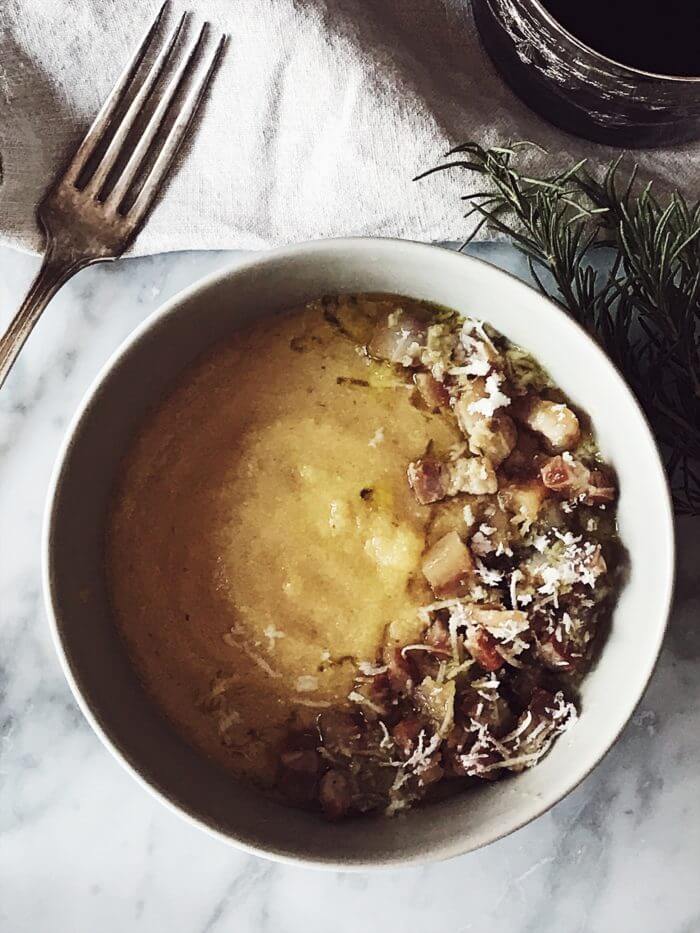
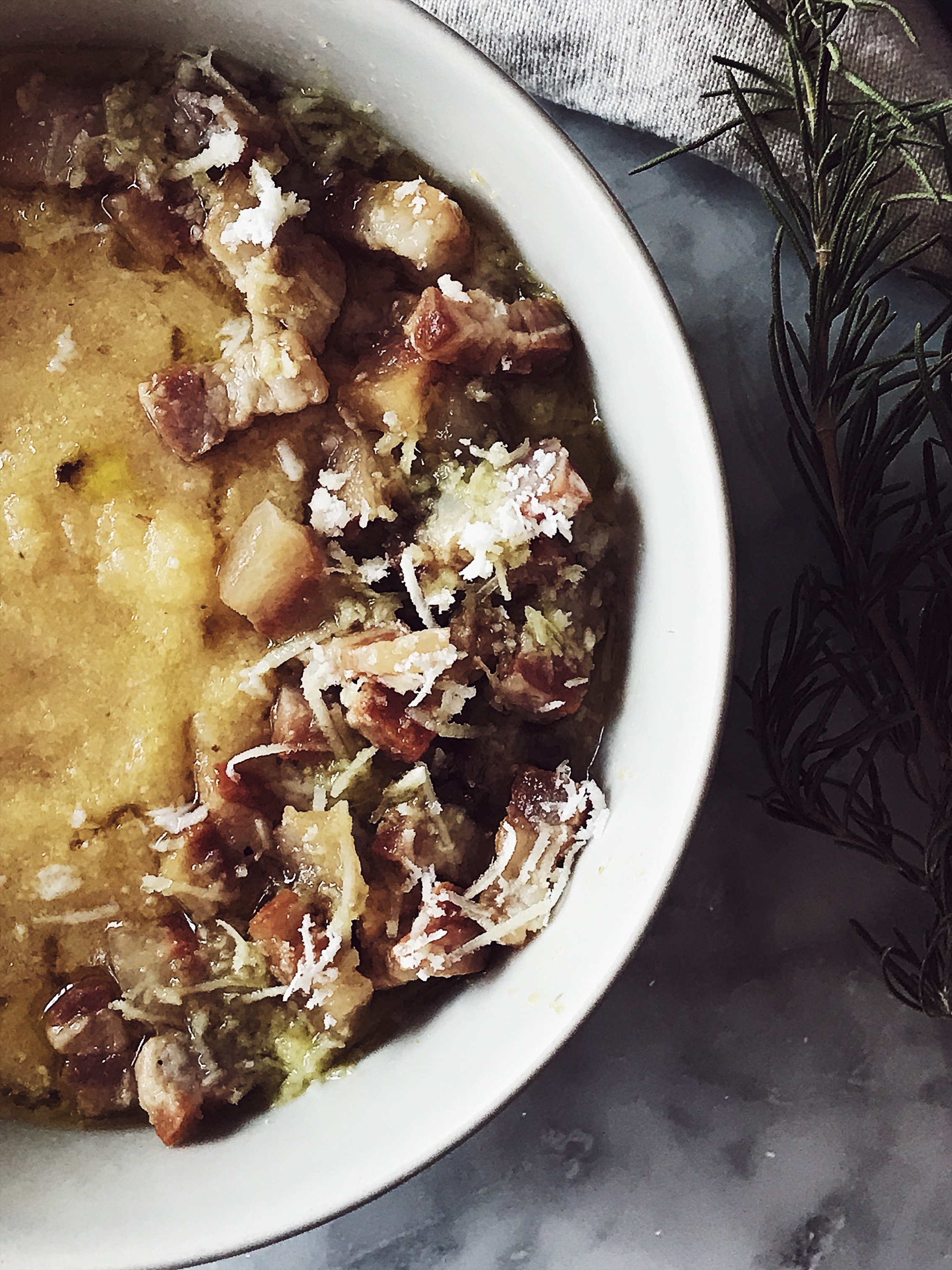
If you’d like to keep things simple once the polenta is ready, one of my favourite ways to serve it is alla gricia: crispy guanciale, its rendered fat, and plenty of freshly grated Pecorino Romano.
how to make polenta from cornmeal
Ingredients
- 8.8 oz corn polenta flour (cornmeal) 250 gr
- 25 oz water 750 gr
- 1 teaspoon salt
- 1 tablespoon olive oil
Instructions
-
Wet and squeeze a cotton dish cloth.
-
Heat water with salt and oil in a medium/large pot, but don’t get to a boil.
-
Add the flour “a fontana” (=sprinkling it over the water little at the time), whisking vigorously.
-
Whisk until completely amalgamated.
-
Cover with the dishcloth (in contact with the polenta paste), leaving a crack open.
-
Place the pot over the smallest of your stoves, at the minimum heat, and cook 30-40 minutes.
-
Remove the cloth and check the consistency. If you’d like it creamier, add hot water until you get the result you are looking for (I added half a cup).
Recipe Notes
If you want to change servings, remember that the proportion between flour and water is 1:3.
You’ll probably find a crust on the bottom of the pot, no worries: soak it in water overnight.
Gricia
If you’re familiar with Roman cuisine, you’ll recognize the inspiration immediately.
Pasta alla gricia is one of Rome’s oldest and most beloved dishes, made with just guanciale, Pecorino Romano and black pepper. Here, those same flavours meet creamy polenta instead of pasta, creating a comforting dish that brings together two different Italian traditions.
Gricia polenta
Ingredients
for the polenta
- 8.8 oz corn polenta flour (cornmeal) 250 gr
- 25 oz water 750 ml
- 1 teaspoon salt
- 1 tablespoon olive oil
for the gricia polenta
- 1.8 oz pecorino cheese 50 gr
- 1.8 oz guanciale 50 gr
Instructions
-
Wet and squeeze a cotton dish cloth.
-
Heat water with salt and oil in a medium/large pot, but don’t get to a boil.
-
Add the flour “a fontana” (=sprinkling it over the water little at the time) and whisk vigorously. Whisk until well mixed.
-
Cover with the dish cloth (in contact with the paste), leaving a chink. Place the pot over the smallest of your stoves, at the minimum heat. Let cook 30-40 minutes.
-
Meanwhile grate the pecorino cheese and julienne guanciale. Brown the guanciale in a small pan (no oil, it will release its own) until crunchy.
-
Remove the cloth and check consistency. If you’d like it creamier, add hot water until you get the result you are looking for (I added half a cup).
-
When the polenta is ready, serve it with the guanciale, its oil and the pecorino cheese.
Enjoy your creamy polenta!
Claudia