
WHY IS ITALY’S SPONGE CAKE CALLED SPANISH?
Pan di Spagna literally means “Spanish Bread.”
Which raises an obvious question.
If this is one of Italy’s most famous cakes, why is it called Spanish?
The answer involves ambassadors, royal courts, Sicily, Genoa, and a pastry chef who probably had no idea his creation would survive for centuries.
The original Pan di Spagna was created in Madrid and served at a grand banquet hosted by the Genoese ambassador Pallavicini.
Its creator, however, was also Genoese: a pastry chef known as Giobatta.
So while the cake was born in Spain, its roots remained unmistakably Italian.
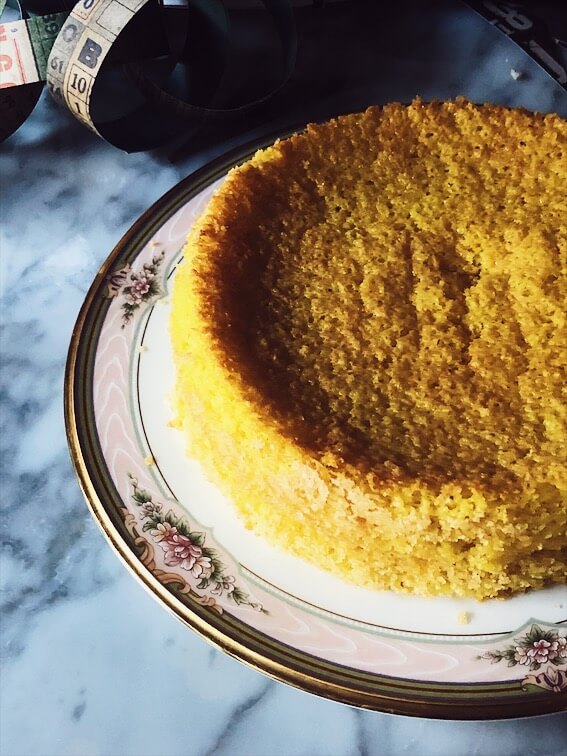
THE CAKE THAT TRAVELED HOME
One of the ways Pan di Spagna returned to Italy was through Sicily.
During the centuries of Spanish influence on the island, this airy sponge gradually found its way into local pastry traditions and eventually became one of the foundations of the famous Cassata.
Today, Pan di Spagna is used throughout Italy for layered cakes, birthday cakes, Zuppa Inglese, Zuccotto, Cassata, and countless other desserts.
Its beauty lies in its simplicity.
No yeast.
Very little flour.
Lots of eggs.
And plenty of air.
A CAKE BUILT ON EGGS
Unlike many sponge cakes, Pan di Spagna relies almost entirely on whipped eggs for its structure.
The result is light, delicate, and surprisingly versatile.
Vanilla works beautifully.
So does lemon zest.
And once baked, it becomes the perfect canvas for pastry cream, whipped cream, fruit, chocolate, or liqueur syrups.
THE CAKE OF CELEBRATIONS
I rarely make a single-layer Pan di Spagna.
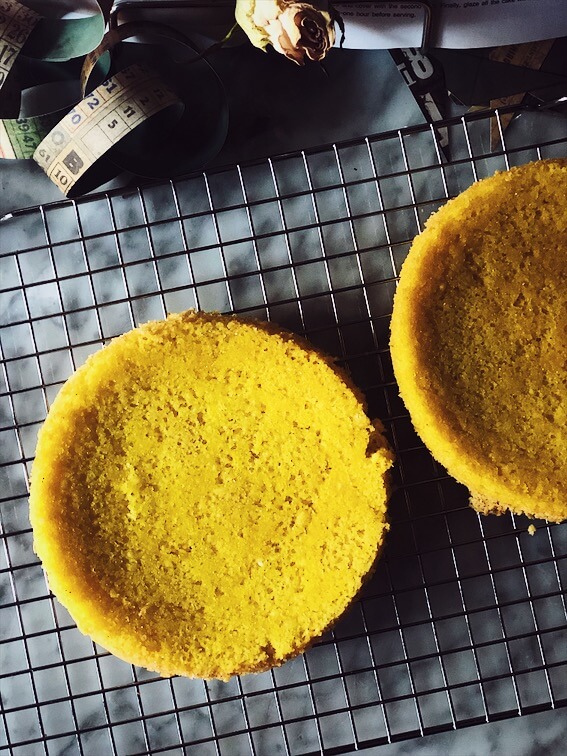
When birthdays arrive, or when I know pastry cream and strawberries are involved, I usually bake two thinner cakes and transform them into a layered dessert.
The kind of cake that appears in the middle of the table and immediately makes everyone happy.
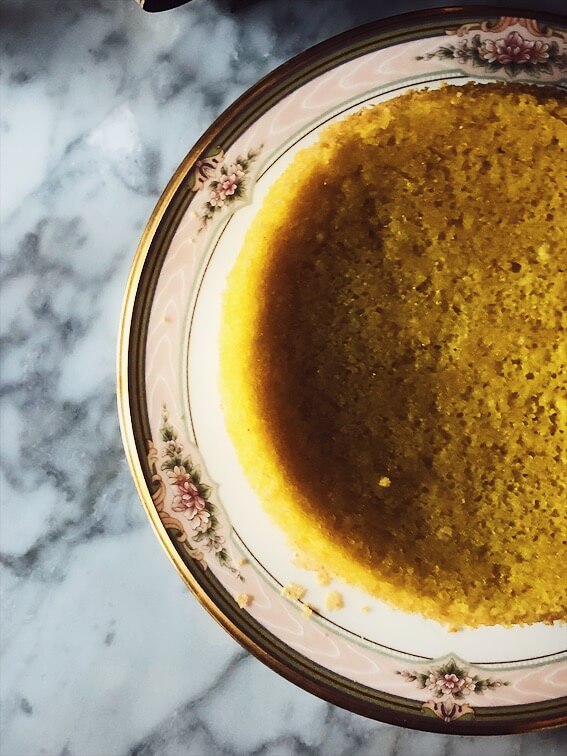
Pan di Spagna or Italian sponge cake
Ingredients
- 3 eggs
- 3 teaspoons boiling water
- 2.6 oz 00 flour 75 gr or 1/2 cup + 1 teaspoon
- 2.6 oz white sugar 75 gr or 1/3 cup + 1 teaspoon
- a few drops of vanilla essence or 1/2 lemon zest
- 2 tablespoons butter
- 2 tablespoons sugar
- a medium size cake mold
Instructions
-
Preheat the oven to 320°F (160°C).
-
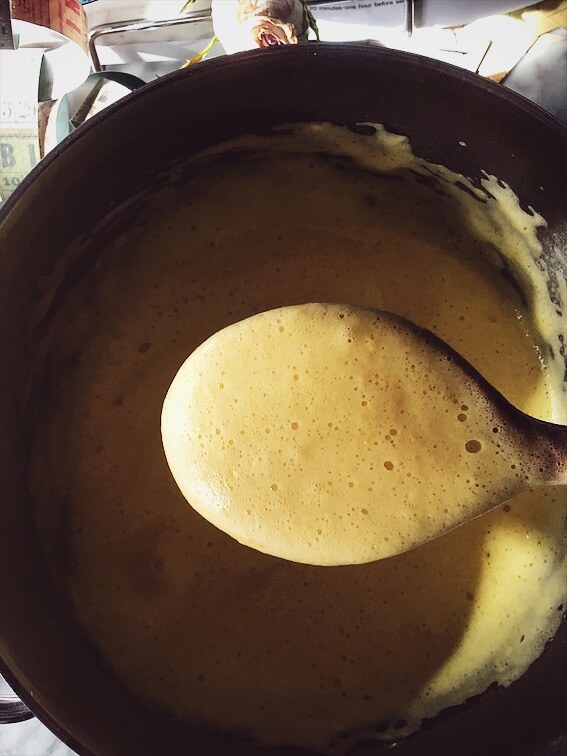
Place the eggs in the stand mixer's bowl, whisk and add the teaspoons of boiling water - one at the time. You should get a frothy mixture.
-
Still mixing, add the sugar and whisk until frothy again.
-
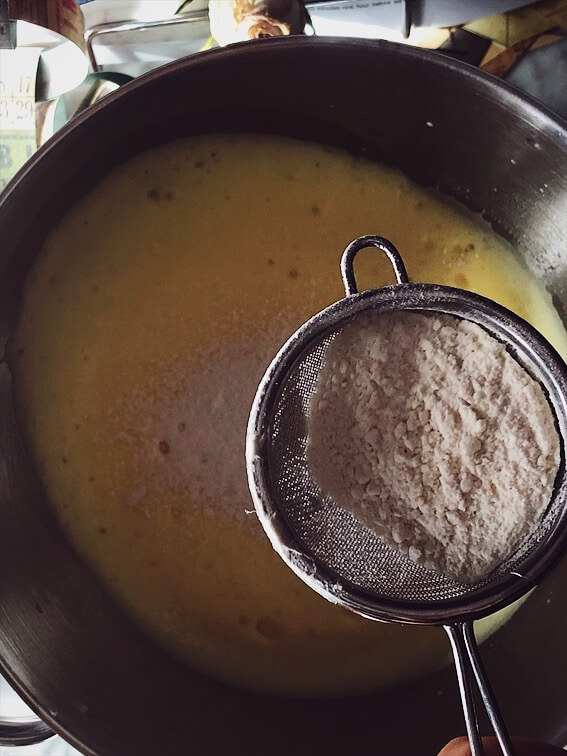
Pour in the flour through a fine sieve and delicately, to incorporate as much air as possible, mix with a wooden spoon.
-
Add the lemon zest and mix.
-
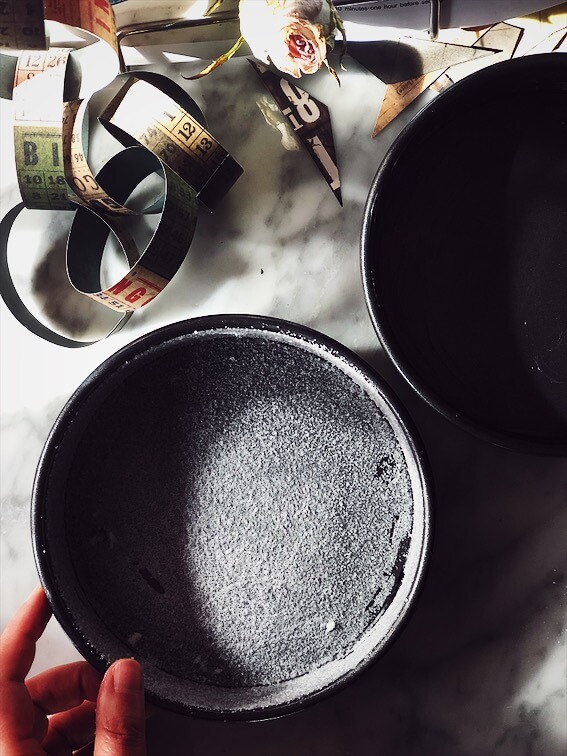
Butter the cake mold and sprinkle it with a tablespoon of sugar, shake and swing to make sure it adheres to all the surface, including walls.
-
Pour the mixture inside the mold and bake 35-45 minutes (stick in a wooden skewer or a knife, if it comes out clean, the cakes is ready).
-
Bring to room temperature before unmolding the cake.
FROM PALERMO’S SIMPOSIO
The journey of Pan di Spagna through Sicily—and its role in desserts like Cassata—is part of the rich culinary history explored in Palermo’s Simposio, where recipes, traditions, and stories intertwine.
Enjoy your Pan di Spagna!
Claudia